Safe Design of Structures
Designer Duties
Designers have specific WHS duties under WHS Act s.22 to ensure structures are designed to eliminate or minimize WHS risks.
"Designer" includes:
- Architects
- Engineers (structural, civil, mechanical, electrical)
- Building designers
- Draftspersons
See Designer Duties for comprehensive coverage.
What is Safe Design?
Safe design integrates WHS considerations into design process to eliminate or minimize risks throughout structure's lifecycle:
- Construction
- Use/occupation
- Maintenance
- Demolition
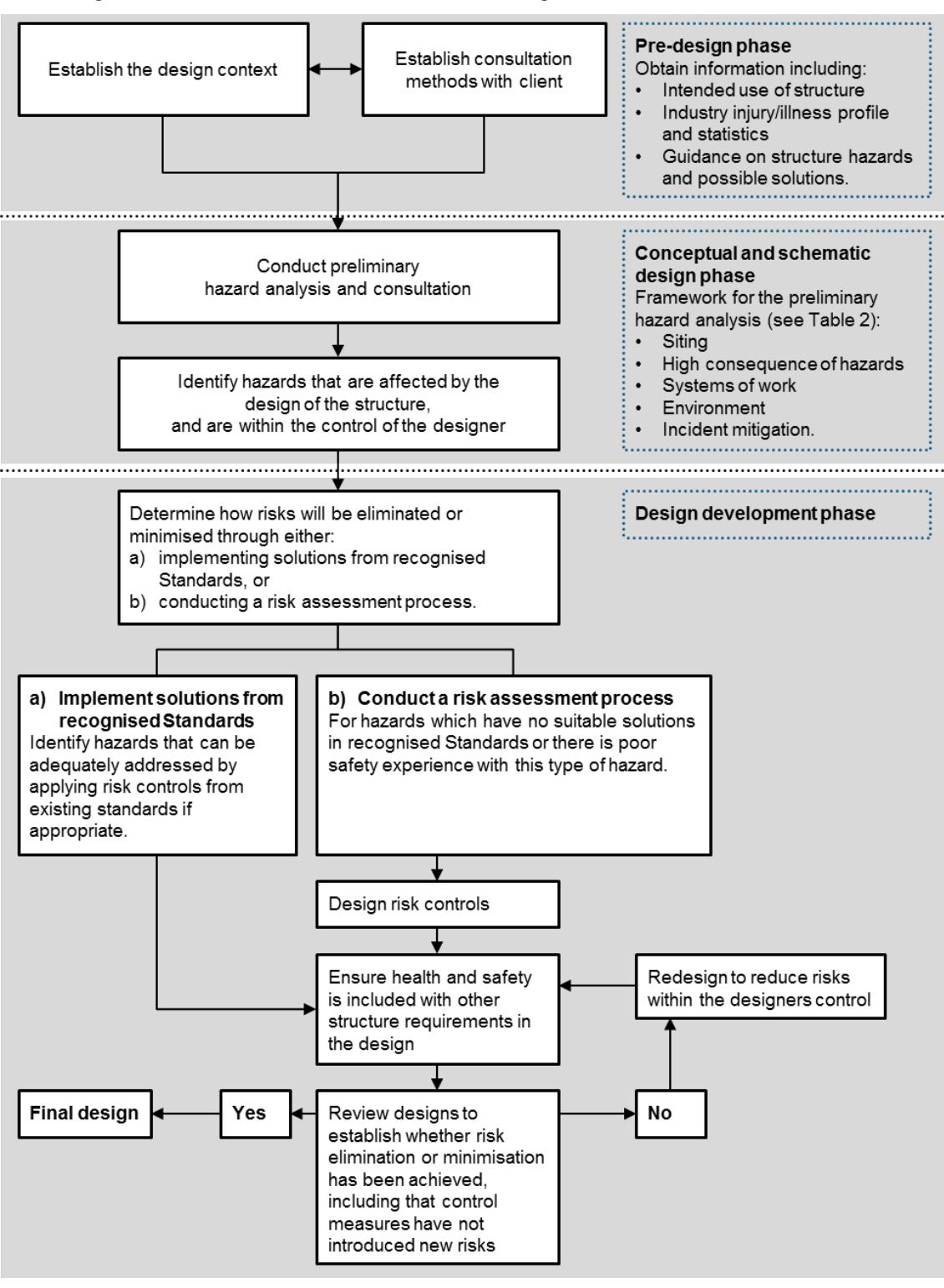
Design for Construction Safety
Falls Prevention
Design features:
- Permanent edge protection (parapets, balustrades)
- Fixing points for temporary edge protection
- Safe roof access (permanent ladders, platforms)
- Avoid or minimize work at heights during construction
Example: Design roof with central walkway and anchor points for harnesses, eliminating need for workers to access fragile areas.
Prefabrication
Eliminate height risks:
- Prefabricate wall panels, trusses at ground level
- Crane into position
- Reduces time working at heights
Example: Prefabricated bathroom pods reduce on-site plumbing/tiling work in confined, elevated spaces.
Construction Sequence
Design to allow safe sequence:
- Consider how structure will be built (not just final form)
- Enable safe temporary works
- Provide support points for formwork
Example: Design floor slabs with edge details that allow guardrails to be installed before slab poured.
Material Selection
Consider:
- Weight (lighter materials easier to handle manually or with smaller plant)
- Size (manageable units reduce manual handling risks)
- Toxicity (specify non-hazardous materials where possible)
Example: Specify lightweight concrete blocks instead of dense concrete blocks (easier manual handling).
Design for Use and Maintenance
Access for Maintenance
Provide safe access to:
- Roofs (gutters, equipment)
- Building services (HVAC, electrical, plumbing)
- Façade (cleaning, repairs)
- Confined spaces (tanks, plant rooms)
Design features:
- Permanent access ladders/stairs
- Platforms and walkways
- Anchor points for fall arrest
- Adequate headroom and workspace
Example: Roof design includes permanent platform around air conditioning units, with guardrails and access ladder.
Eliminate Cleaning Risks
Design to minimize:
- Window cleaning at heights (specify self-cleaning glass or mechanical cleaning systems)
- Gutter cleaning risks (leaf guards, adequate roof drainage)
Example: Commercial building designed with Building Maintenance Unit (BMU) - permanent system for safe façade access.
Services Access
Avoid confined spaces:
- Design accessible plant rooms (not cramped ceiling spaces)
- Provide adequate access openings (not squeeze-through hatches)
- Natural ventilation where possible
Example: Place electrical switchboards in dedicated, accessible room rather than ceiling space.
Design for Demolition
Consider end-of-life:
- Modular construction (easier to dismantle)
- Document hazardous materials used (future reference)
- Removable connections (less cutting/breaking required)
Example: Steel-framed building with bolted connections can be disassembled with less dust/noise/vibration than concrete demolition.
Information to Provide
Designer's Safety Report
Designers should prepare report covering:
1. Purpose and Limits of Design
- Intended use
- Load limits
- Design life
2. Hazards and Risks
- Hazards unique to the particular design that create a risk to persons carrying out construction work
- Residual risks requiring controls
3. Safe Work Recommendations
- Suggested construction methods
- Required temporary works
- Recommended equipment
- Maintenance procedures
4. Hazardous Materials
- Materials used in design (asbestos, lead paint, treated timber)
- Location and quantity
- Safe handling/removal requirements
When to Provide
- With design documentation
- Before construction/installation begins
- Update if design changes
Who Receives
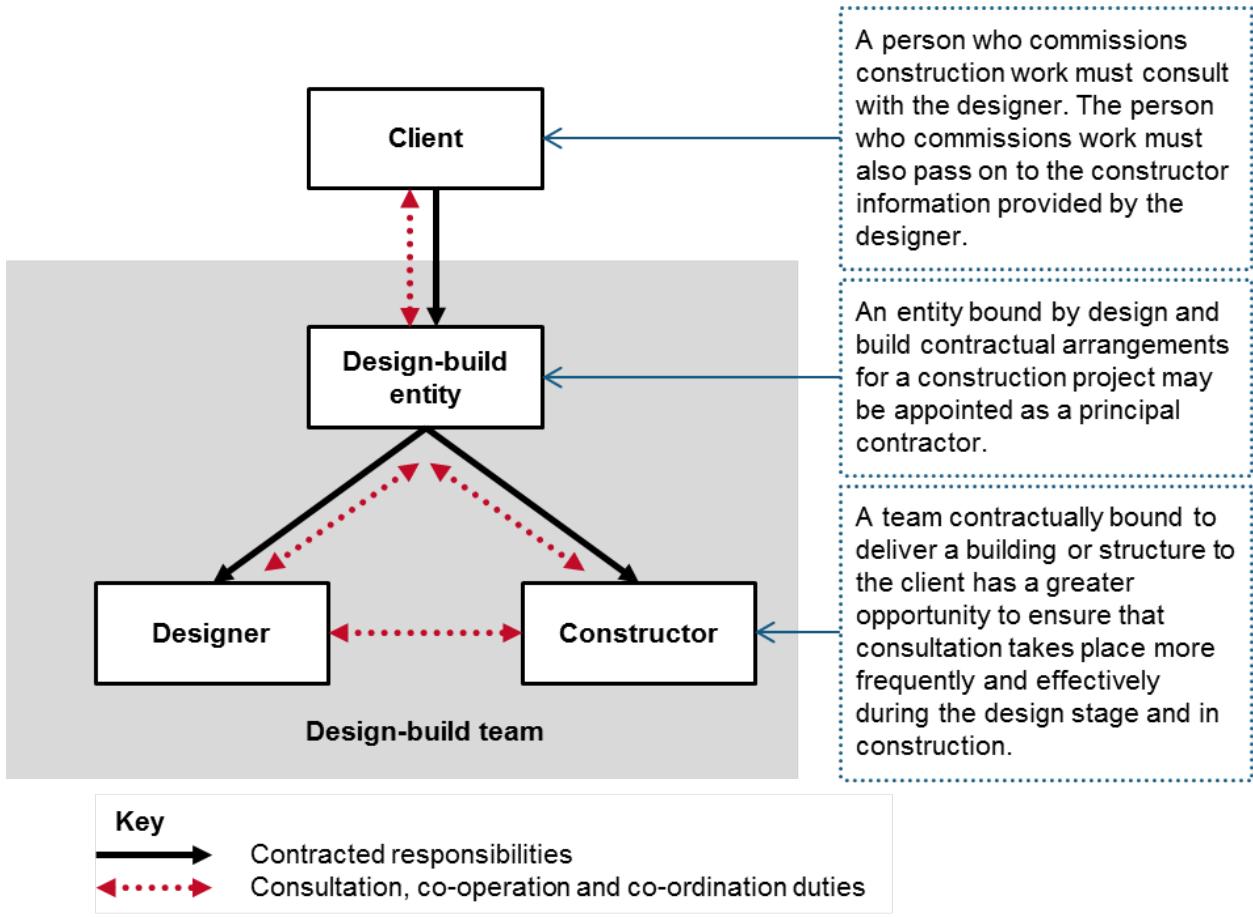
- The Client (PCBU who commissioned the design)
- (Client must then provide it to the Principal Contractor)
- Future occupants/owners
Consultation
Designers must consult with:
- Others involved in design (multi-disciplinary teams)
- PCBUs who will construct structure
- Future users (where known)
Purpose:
- Share WHS knowledge
- Identify hazards early
- Develop practical solutions
Example: Architect consults with scaffolder during design to ensure building façade allows safe scaffold installation.
Practical Examples
Example 1: Residential Roof Design
Hazard: Falls during construction and maintenance.
Design Solutions:
For Construction:
- Trusses prefabricated on ground
- Crane lift into position
- Temporary edge protection fixing points on slab edge
- Roof battens designed to support safety mesh installation
For Maintenance:
- Install permanent gutter guard (eliminates gutter cleaning)
- Roof anchor points at ridge for harness attachment
- Safe access via permanent roof ladder (fixed to wall)
Information Provided:
- Truss drawings showing lift points
- Specification for edge protection fixings
- Anchor point load ratings and installation instructions
Example 2: Commercial Building HVAC Access
Hazard: Falls and confined space risks accessing rooftop equipment.
Design Solutions:
Access:
- Internal staircase to roof (not external ladder)
- Landing at roof access door
- Permanent walkways between equipment (1.2m wide, guardrails)
Work Area:
- Platforms around all equipment (adequate workspace)
- Guardrails on all platforms and roof edges
- Adequate lighting
Confined Space Elimination:
- All plant in open, accessible locations (not cramped ceiling spaces)
- Ventilation openings for natural air flow
Information Provided:
- Roof layout showing walkways and platforms
- Anchor point locations for equipment lifting
- Maintenance access procedures
Example 3: Warehouse Design
Hazards: Falls, manual handling, forklift risks.
Design Solutions:
Structure:
- Adequate floor strength for racking loads
- Wide aisles (3m minimum for forklift operation)
- Level floor (reduces manual handling strain, safer for forklifts)
Loading Docks:
- Recessed loading dock (level with truck bed, eliminates step)
- Dock levelers for height adjustment
- Guardrails at edges
- Wheel stops
Racking:
- Specify racking design loads clearly
- Adequate aisle widths for safe forklift use
- Loading height within ergonomic reach zones
Lighting:
- Adequate lighting for forklift operation (150 lux minimum)
- Emergency lighting for safe evacuation
Information Provided:
- Floor load capacity documentation
- Racking installation requirements
- Safe forklift operating procedures
Benefits of Safe Design
For All Stakeholders:
Fewer Injuries:
- Eliminates hazards at source (most effective control)
- Protects workers throughout structure lifecycle
Lower Costs:
- Reduces incidents (workers compensation, project delays)
- Minimizes expensive retrofits to address WHS issues
- Lower maintenance costs (safer access = faster, cheaper maintenance)
Legal Compliance:
- Meets designer duties under WHS Act
- Reduces liability risks
Better Quality:
- Integrated approach produces better outcomes
- Considers whole lifecycle, not just initial construction
Common Design Hazards to Address
Falls:
- Work at heights during construction
- Roof access for maintenance
- Window cleaning
Manual Handling:
- Heavy materials
- Awkward lifts during construction
Confined Spaces:
- Services in ceiling voids
- Tanks, vessels
Structural Stability:
- During construction (temporary works)
- Demolition sequence
Hazardous Materials:
- Specify non-hazardous alternatives
- Document unavoidable hazardous materials