Confined Spaces
What is a Confined Space?
A confined space is an enclosed or partially enclosed space that:
- Is not designed or intended for continuous human occupancy, AND
- Has one or more of these characteristics:
- Limited entry/exit
- Unfavorable natural ventilation
- Risk of harmful atmosphere
- Risk of engulfment
Common Construction Confined Spaces:
- Trenches/excavations (only if specific hazardous criteria met, not based on depth alone)
- Tanks, vessels, silos
- Pits, sumps, wells
- Sewers, drains, culverts
- Roof spaces with limited access
- Tunnels and shafts
- Bins and hoppers
Confined spaces kill workers quickly. Most deaths occur during attempted rescues by untrained persons.
Major Hazards
Atmospheric Hazards
Oxygen Deficiency:
- Normal oxygen: 20.9%
- Safe working level: 19.5-23.5%
- < 19.5%: Drowsiness, unconsciousness, death
- Causes: Consumption by chemical processes, displacement by other gases
Toxic Gases:
- Carbon monoxide (CO) - colorless, odorless, deadly
- Hydrogen sulfide (H₂S) - "rotten egg" smell, toxic
- Sewer gases, chemical vapors
Flammable Atmospheres:
- Methane, LPG, solvents
- Risk of fire/explosion
Toxic Dusts/Fumes:
- Welding fumes in enclosed spaces
- Dust accumulation
Physical Hazards
- Burial by grain, sand, liquids
- Can occur rapidly
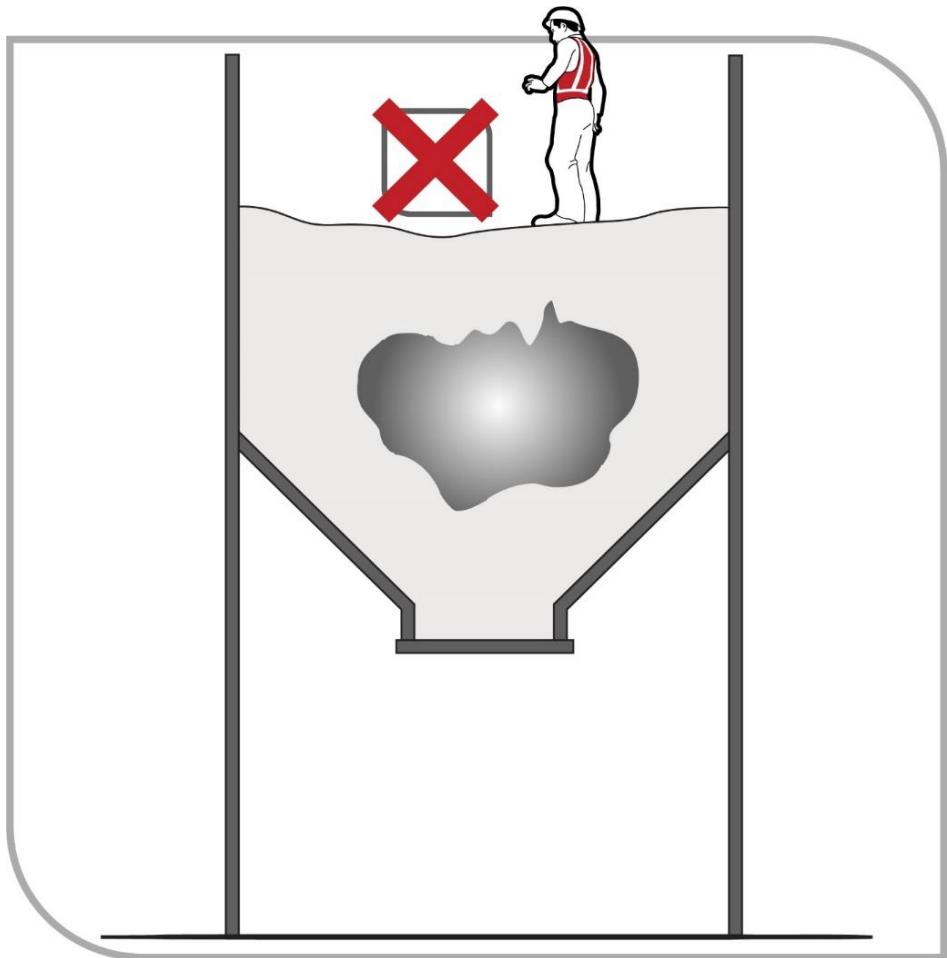 Figure: Example of 'bridging' which may result in engulfment
Entrapment:
- Limited escape routes
- Difficult rescue access
Temperature Extremes:
- Heat stress in hot confined spaces
- Hypothermia in cold/wet spaces
Other:
- Noise, slips/trips, falling objects
- Mechanical equipment
Identifying Confined Spaces
Risk Assessment Required: Assess each space before entry to determine if it's a confined space.
Consider:
- Is it enclosed/partially enclosed?
- How many entry/exit points?
- How quickly could atmosphere become hazardous?
- What work will be done inside (might create hazards)?
- Has space contained hazardous substances?
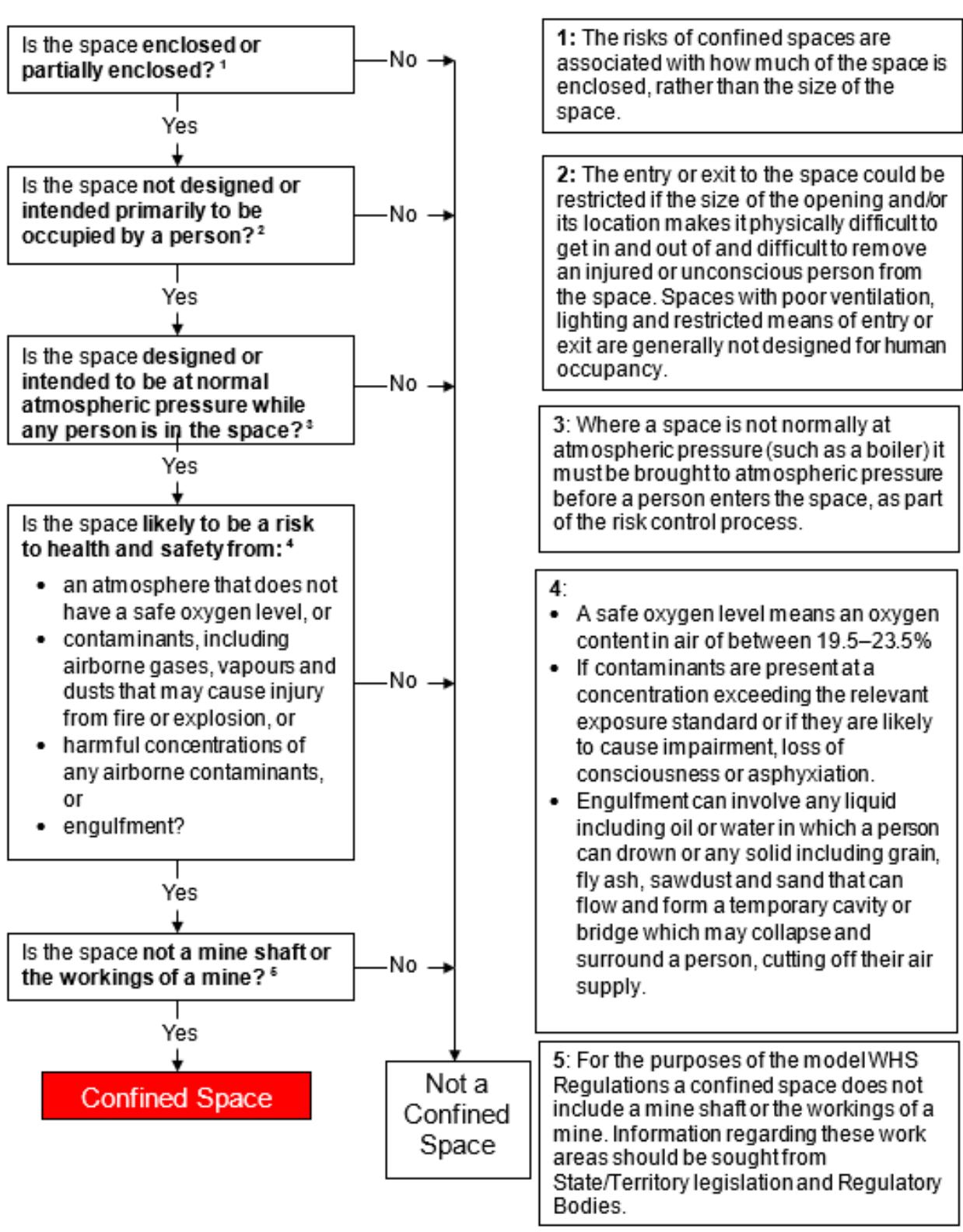 Figure: Flowchart for identifying a confined space
When is Confined Space Entry HRCW?
Work in/near confined space is HRCW requiring SWMS.
Managing Confined Space Risks
Hierarchy of Control
Level 1: Elimination
Eliminate need to enter:
- Remote inspection (cameras, drones)
- Automation/robotics
- Design changes
Example: Install tank with external manholes for cleaning instead of requiring internal entry.
Level 2: Minimize Risks if Entry Required
Engineering Controls:
Ventilation:
- Forced ventilation to maintain safe atmosphere
- Fresh air supply
- Continuous operation during entry
Isolation:
- Isolate from energy sources (electrical, mechanical, hydraulic)
- Lockout/tagout
- Blank off pipes (prevent ingress of substances)
- Drainage to prevent flooding
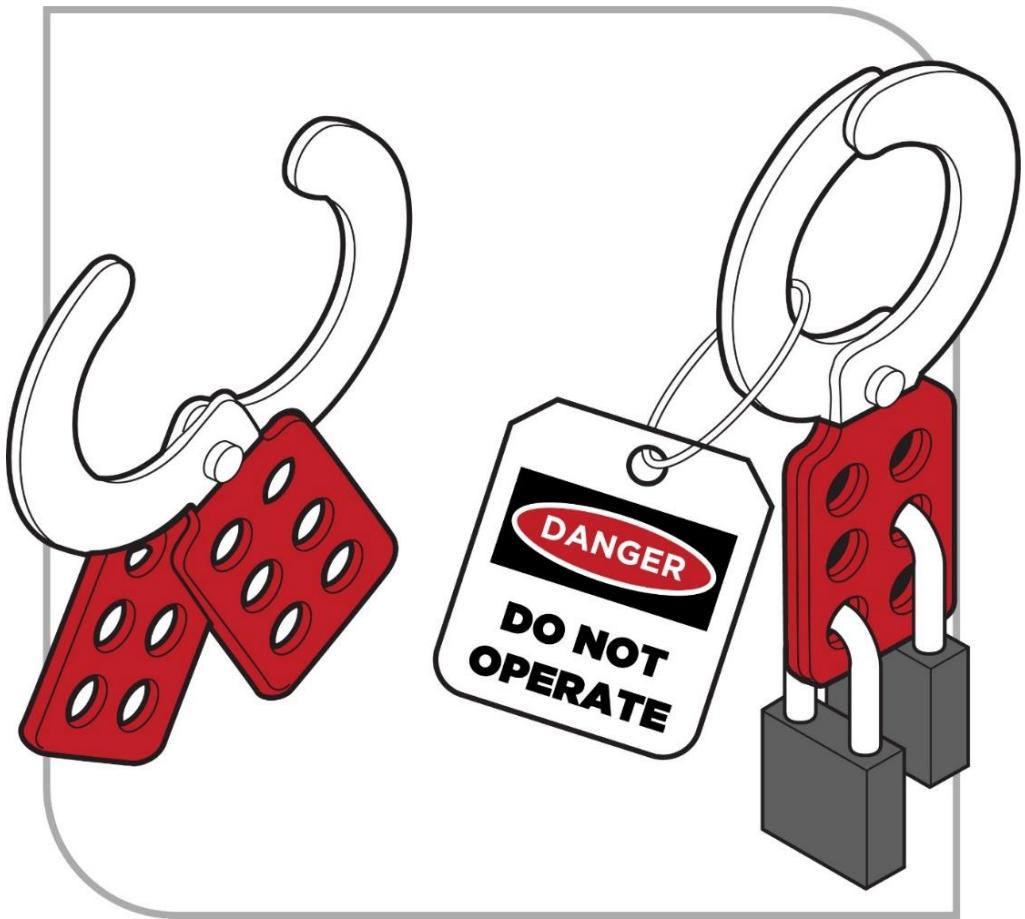 Figure: Example of tag and lockout isolation
Atmospheric Monitoring:
- Continuous monitoring during entry
- Test for oxygen, flammable gases, toxic gases
- Calibrated instruments
- Alarms if atmosphere unsafe
Access/Egress:
- Improve access points where possible
- Ensure rescue equipment can be used
Level 3: Administrative/PPE
Entry Permits:
- Written authority to enter
- Confirms controls in place
- Authorizer signs permit
Training:
- Confined space awareness
- Emergency procedures
- Equipment use
Standby Person:
- Remains outside
- continuously monitor the wellbeing of those inside the space
- observe the work being carried out where practicable
- Maintains communication
- Raises alarm if needed
- Does not enter for rescue
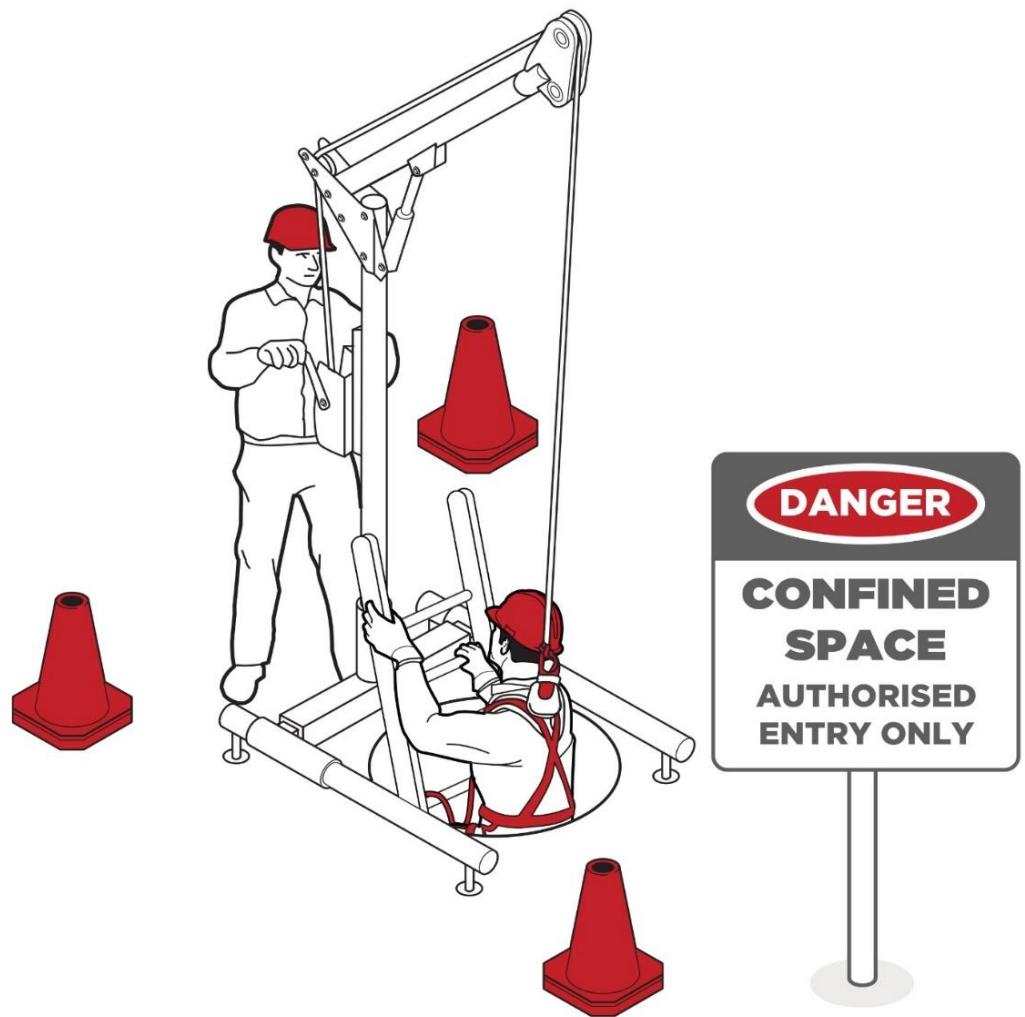 Figure: Standby person monitoring confined space with rescue equipment
Respiratory Protection:
- Supplied-air respirators (continuous fresh air)
- Self-contained breathing apparatus (SCBA) for IDLH atmospheres
- NOT air-purifying respirators in oxygen-deficient spaces
Other PPE:
- Full-body harness with retrieval line
- Hard hat, gloves, boots
- Protective clothing
Atmospheric Testing
Before Entry:
- Test atmosphere from outside
- Test top, middle, bottom (gases stratify)
- Only enter if safe
During Entry:
- Continuous monitoring
- Alarm if atmosphere changes
- Exit immediately if unsafe
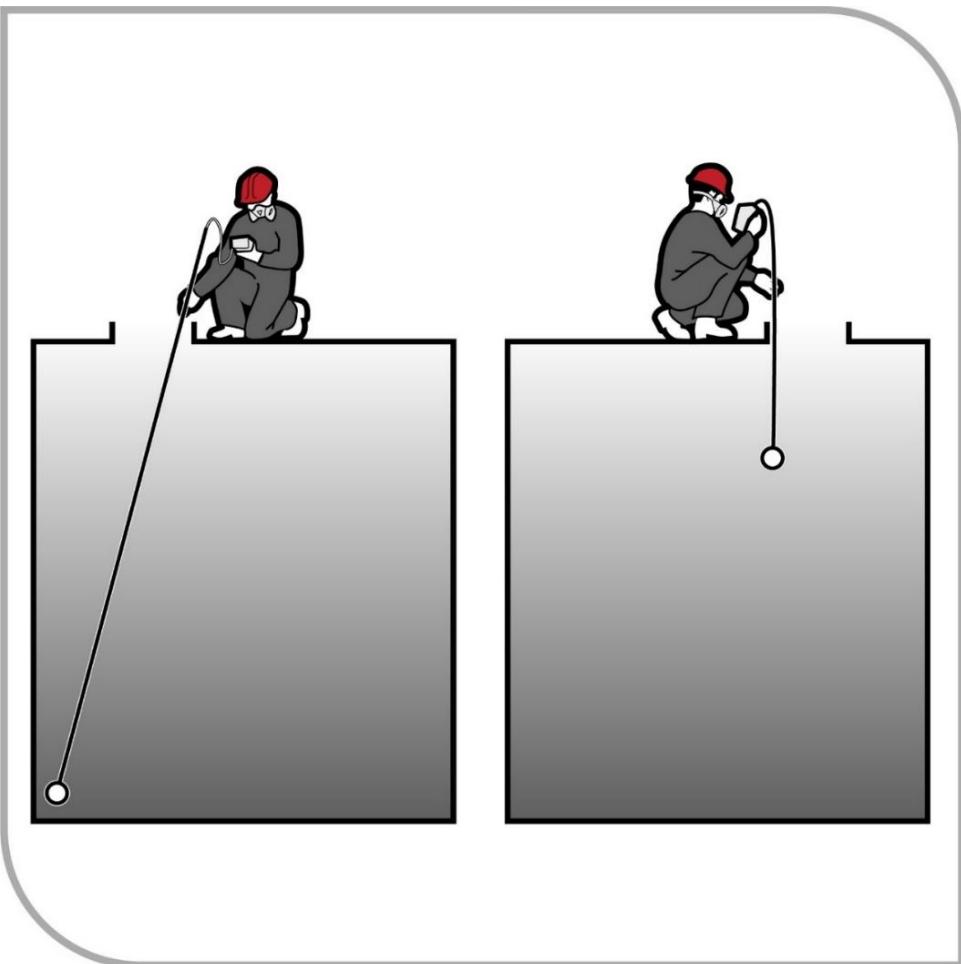 Figure: Atmospheric testing of different levels (gases stratify)
Testing For:
- Oxygen: 19.5-23.5% safe
- Flammable gases: <5% of lower explosive limit (LEL)
- Toxic gases: Below exposure standards (CO, H₂S, etc.)
Equipment:
- Multi-gas detector (O₂, LEL, CO, H₂S minimum)
- Calibrated and bump-tested
- Alarms set correctly
Entry Permits
Permit Must Specify:
- Location and description of space
- Purpose of entry
- Duration of entry
- Names of entrants, standby person, supervisor
- Hazards identified
- Control measures required
- Atmospheric test results
- Emergency contact numbers
- Authorizer signature
Before Entry:
- All control measures verified in place
- All personnel briefed
- Permit signed
During Entry:
- Permit displayed at entry point
- Valid for specified duration only
- Cancelled if conditions change
Emergency Response and Rescue
Untrained, unequipped rescue attempts kill more people than the original incident. DO NOT ENTER.
Requirements:
Rescue Plan:
- Specific to confined space
- Method to retrieve without entry (preferred)
- Rescue equipment identified
- Trained rescue personnel or emergency services
- Regular drills
Retrieval Equipment:
- Full-body harness on entrant
- Retrieval line attached
- Mechanical retrieval winch (can lift unconscious person)
- Available for immediate use
Communication:
- Constant communication between entrant and standby person
- Method: visual, verbal, radio, rope signals
- Standby person raises alarm immediately if communication lost
If Emergency:
- Standby person raises alarm
- Calls emergency services (000)
- Attempts non-entry rescue if safe (use retrieval line/winch)
- Does NOT enter confined space
- Provides information to emergency responders
Practical Example
Scenario: Inspecting inside concrete water tank (empty, 3m deep)
Before Entry
Identify: Confirmed confined space (enclosed, limited exit, unfavorable ventilation)
Assess Hazards:
- Oxygen deficiency (enclosed space)
- Slip hazard (wet surfaces)
- Limited access (single manhole 600mm diameter)
Controls Implemented:
Engineering:
- Forced ventilation (blower supplying fresh air)
- Continuous atmospheric monitoring (O₂, LEL, CO)
- Tank isolated (valves locked shut, tagged)
- Lighting installed
Administrative:
- Entry permit prepared and authorized
- Entrant and standby person briefed
- Emergency services notified (on standby)
PPE:
- Full-body harness with retrieval line
- Supplied-air respirator (continuous fresh air supply)
- Hard hat, gloves, non-slip boots
During Entry
- Atmospheric test: O₂ 20.8%, LEL 0%, CO 0 ppm ✓
- Standby person positioned at entry
- Communication maintained (verbal through manhole)
- Continuous monitoring (alarm if atmosphere changes)
- Inspection completed in 20 minutes
- Entrant exits safely
Result
Safe entry and exit. Continuous monitoring and standby person provided safety net.