Excavation Work
What is Excavation Work?
Excavation means removing soil or rock using tools, machinery or explosives to form open trenches, holes or cavities.
Common Construction Excavations:
- Trenches for footings, services, drainage
- Bulk excavation for basements, cut-and-fill
- Service pits
- Bored piles
When is Excavation High-Risk Construction Work?
Excavation is HRCW requiring SWMS if:
- Depth > 1.5 meters, OR
- Risk of person falling in (any depth)
Major Hazards
Collapse of Excavation Walls: Most serious risk - can bury and kill workers instantly.
Underground Services: Striking gas, electricity, water, telecommunications.
Falls into Excavation: Workers or public falling in.
Mobile Plant: Excavators, trucks reversing near excavation edge.
Asphyxiation/Toxic Atmosphere: Deep excavations may have oxygen deficiency or toxic gases.
Before Excavating - Service Location
Striking underground services causes deaths, serious injuries, major disruptions. Service location is mandatory.
Process:
1. Dial Before You Dig (1100):
- Call at least 2 business days before excavating
- Obtain plans showing underground services
- Free service
2. Locate Services on Ground:
- Use plans and cable/pipe locators
- Mark position with paint or pegs
- Assume all services are live and pressurized
3. Hand Dig to Expose:
- Within 500mm of marked services, hand dig only
- Use spades/shovels (not picks or mattocks)
- Carefully expose services
- Confirm type, depth, condition
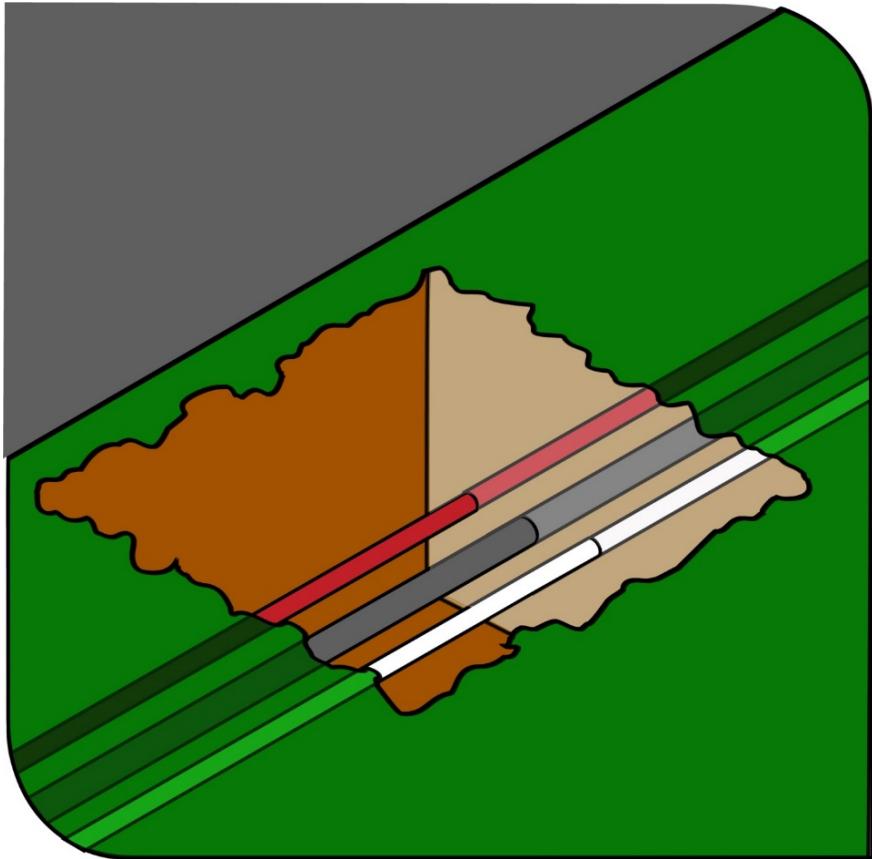 Figure: Underground essential services exposed by potholing
4. Protect Exposed Services:
- Support services crossing excavation
- Protect from damage
- Maintain clearances
- Backfill properly when complete
Preventing Excavation Collapse
Assessing Collapse Risk
Factors Affecting Stability:
- Soil type (clay more stable than sand)
- Moisture content (wet soil less stable)
- Depth
- Nearby loads (plant, stockpiles, traffic)
- Vibration
- Previous excavation/disturbance
When is Shoring/Battering Required?
- Always for excavations >1.5m in unstable soil
- Any excavation where collapse risk exists
- Competent person assesses stability
Control Measures
Level 1: Elimination
- Avoid excavation (alternative construction methods)
- Trenchless technology (pipe bursting, boring)
Level 2: Engineering Controls
Battering (Sloping Walls):
- Cut walls at safe angle (typically 1:1 or flatter)
- Depends on soil type
- Requires more space
- Most reliable for short-duration work
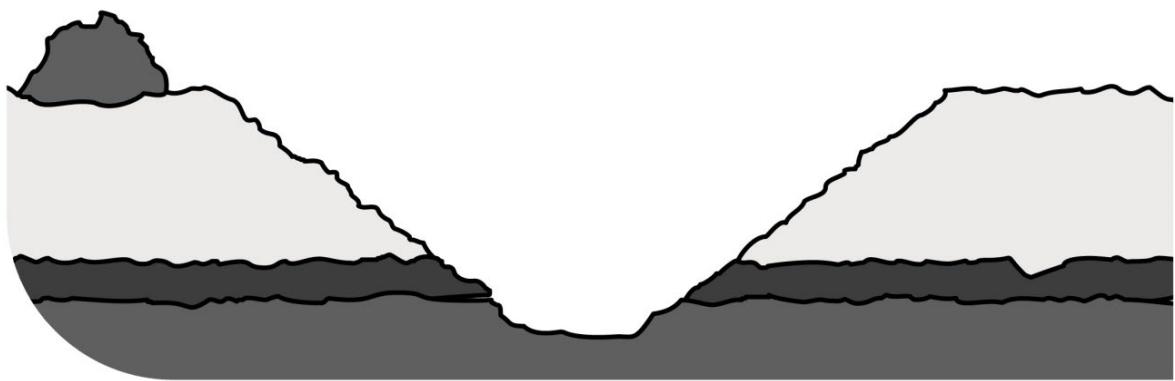 Figure: Battering - sloping walls
Shoring (Prevents Collapse):
- Hydraulic/mechanical supports hold walls
- Prevents collapse from occurring
- Allows vertical walls (less space)
- Must be designed by competent person
- Installed progressively as excavation deepens
- Removed carefully during backfilling
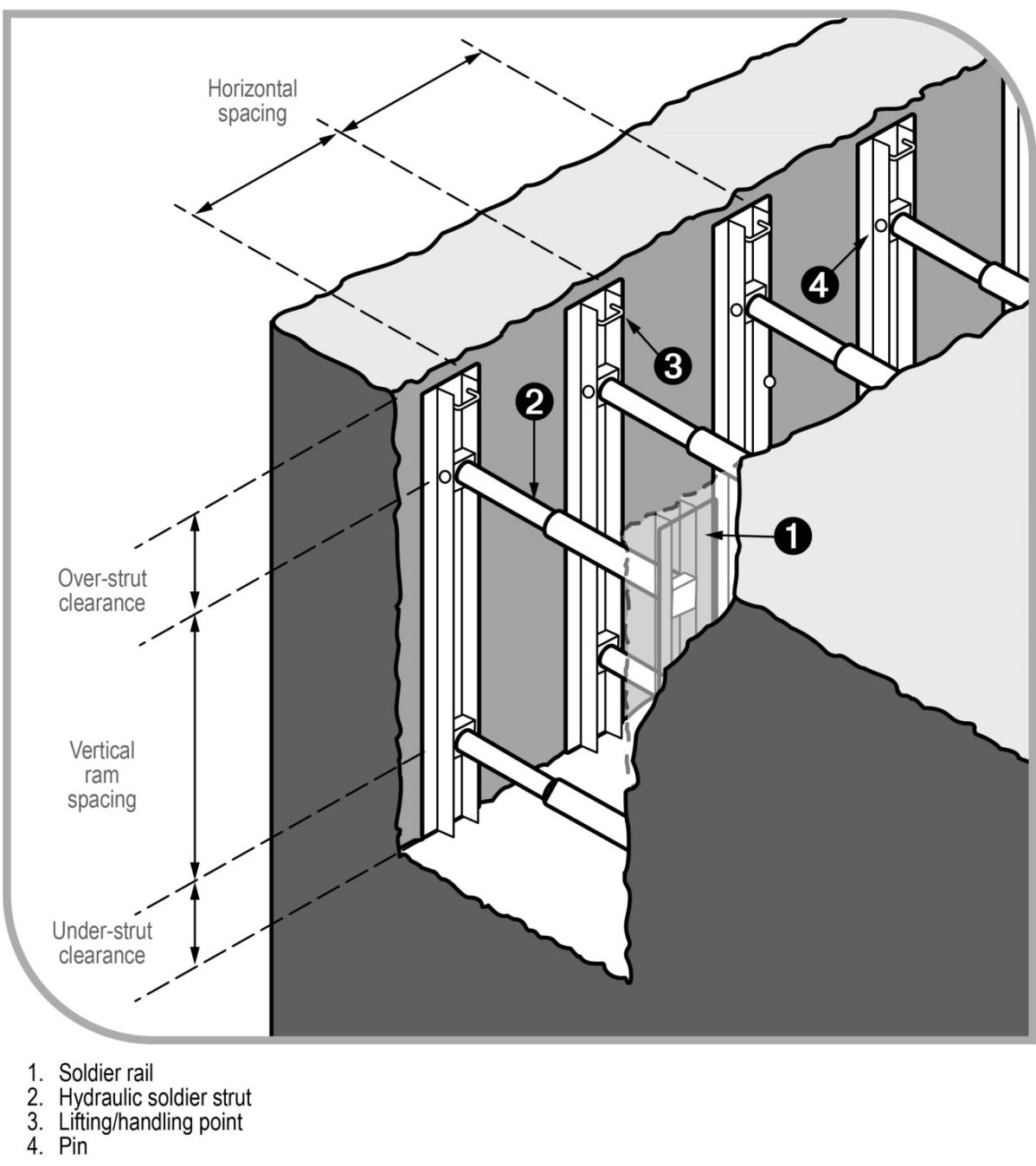 Figure: Hydraulic shoring (soldier set style)
Shields and Boxes (Protects Workers):
- Designed to protect workers if a collapse occurs
- Does not prevent collapse of excavation walls
- Only for worker safety, not ground support
- Do not assume shield will hold up a wall
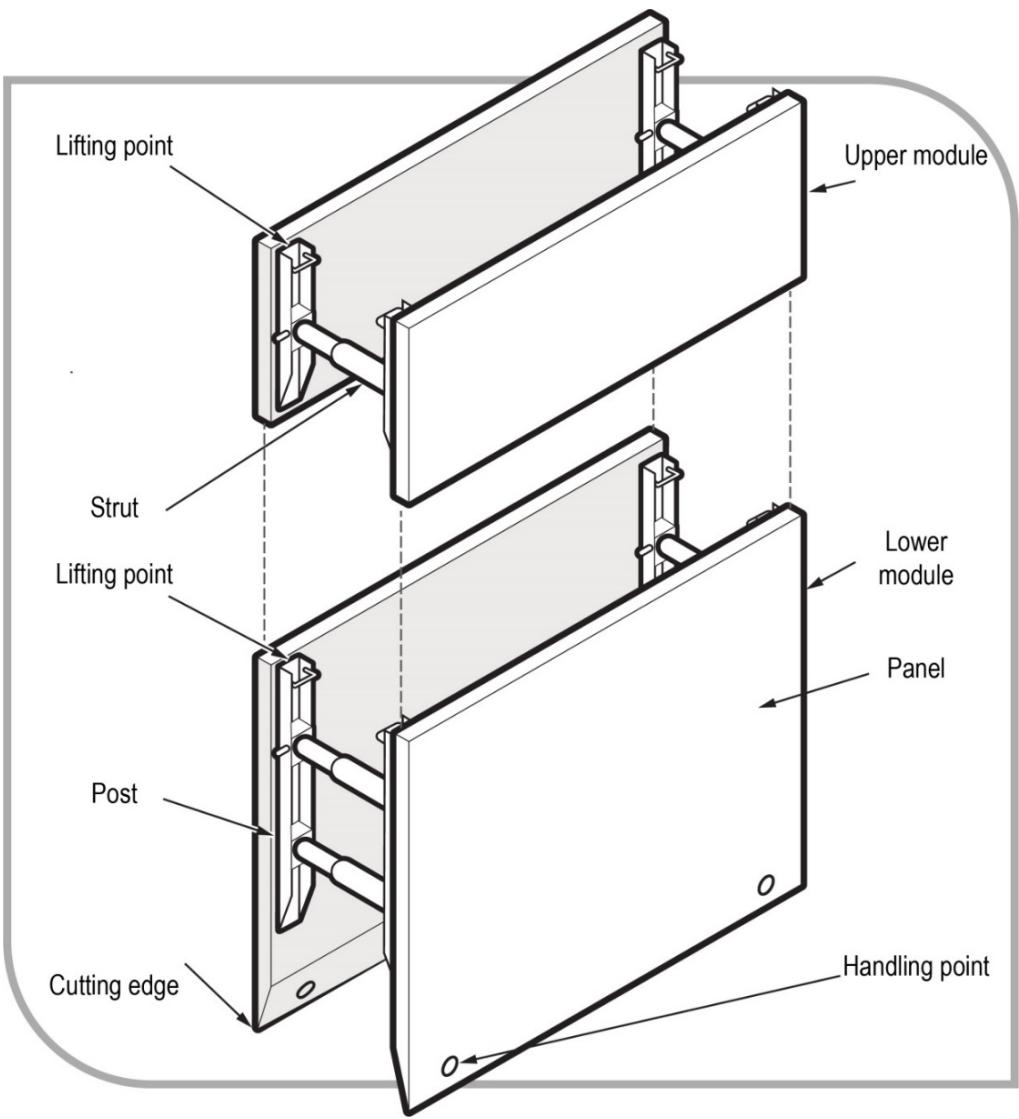 Figure: Typical trench shield
Benching:
- Step excavation in stable soil
- Reduces wall height
- May combine with battering
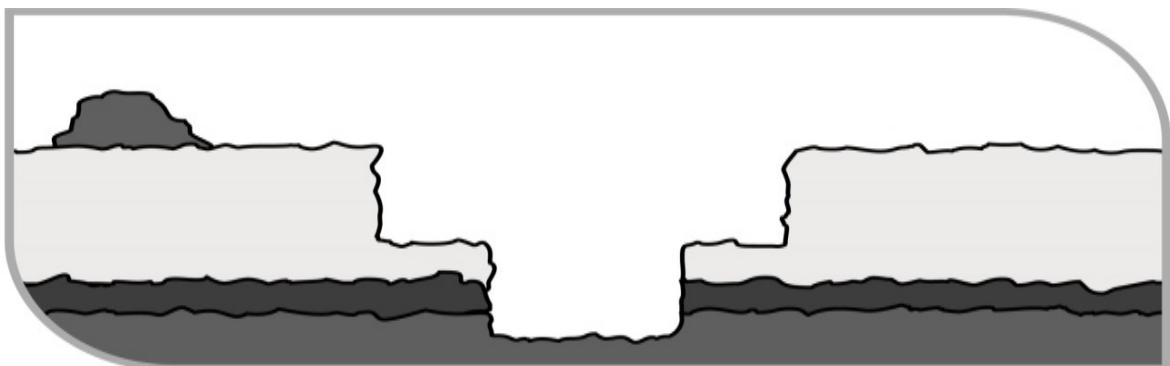 Figure: Benching
Level 3: Administrative/PPE
- Exclusion zones
- Barricades/barriers
- Warning signs
- Competent supervision
- SWMS
- PPE (hard hats, boots, hi-vis)
Inspection
Daily Inspection Required:
- Check for cracks, subsidence
- Check supports tight and secure
- After rain, vibration, ground movement
- By competent person
Safe Access and Egress
Requirements:
- Safe means of entry and exit
- Ladder secured, extends 1m above excavation
- Clear path to access point
Deep Excavations: Multiple access points may be needed.
Edge Protection
Falls into Excavation:
- Barriers approximately 1.5m from edge (prevents collapse and falls)
- Guardrails if excavation remains open
- Covers over narrow trenches (must support traffic loads)
- Adequate lighting
- Warning signs
Exclusion Zones: Keep plant and vehicles back from edge (minimum 1.5 times excavation depth).
Stockpiles and Spoil
- Minimum at least 1m (1000mm) from excavation edge (prevents surcharge loading)
- Consider wall stability when placing
- Do not undercut stockpiles
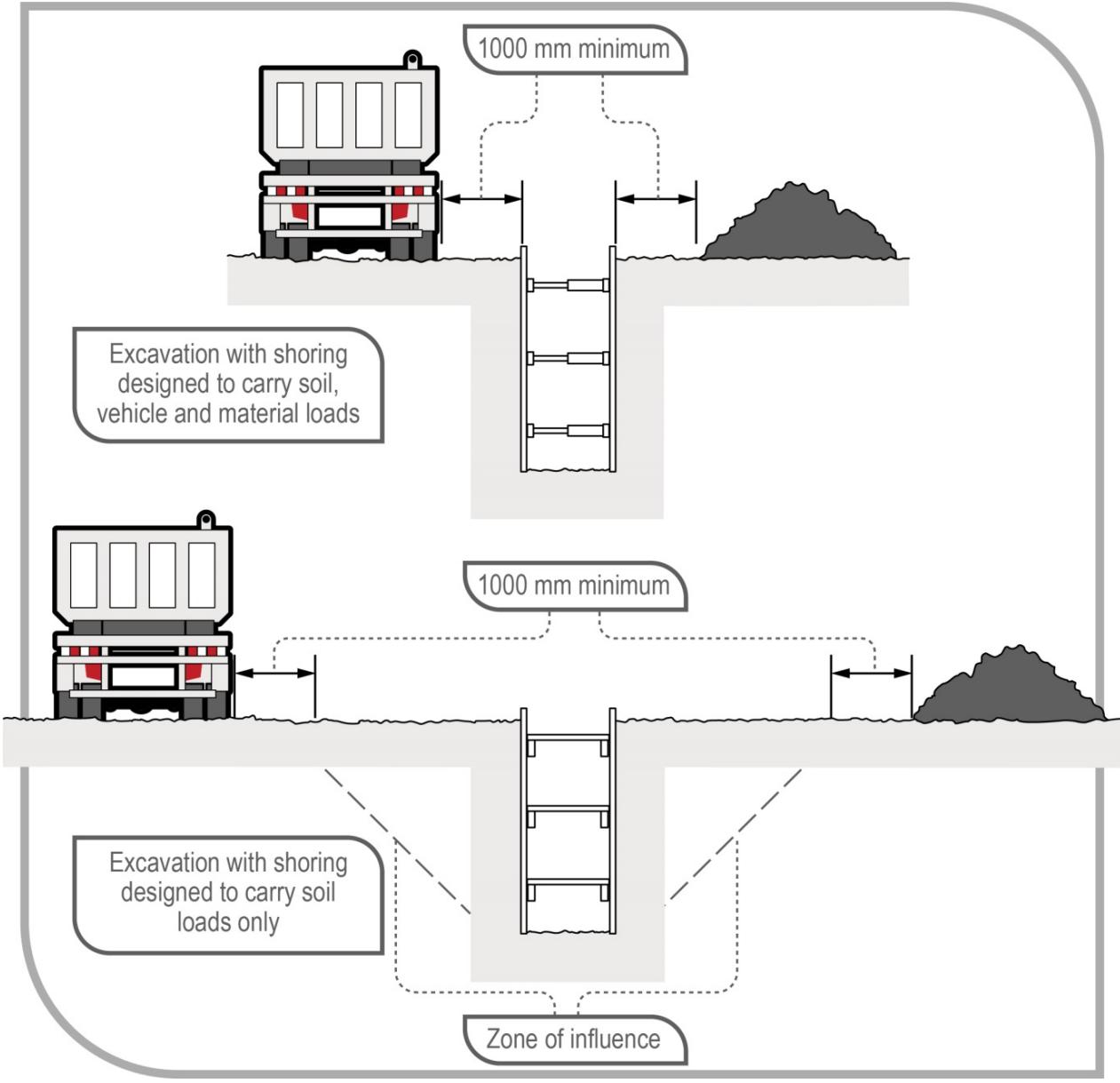 Figure: Excavated material and loads near excavations - Effect of zone of influence
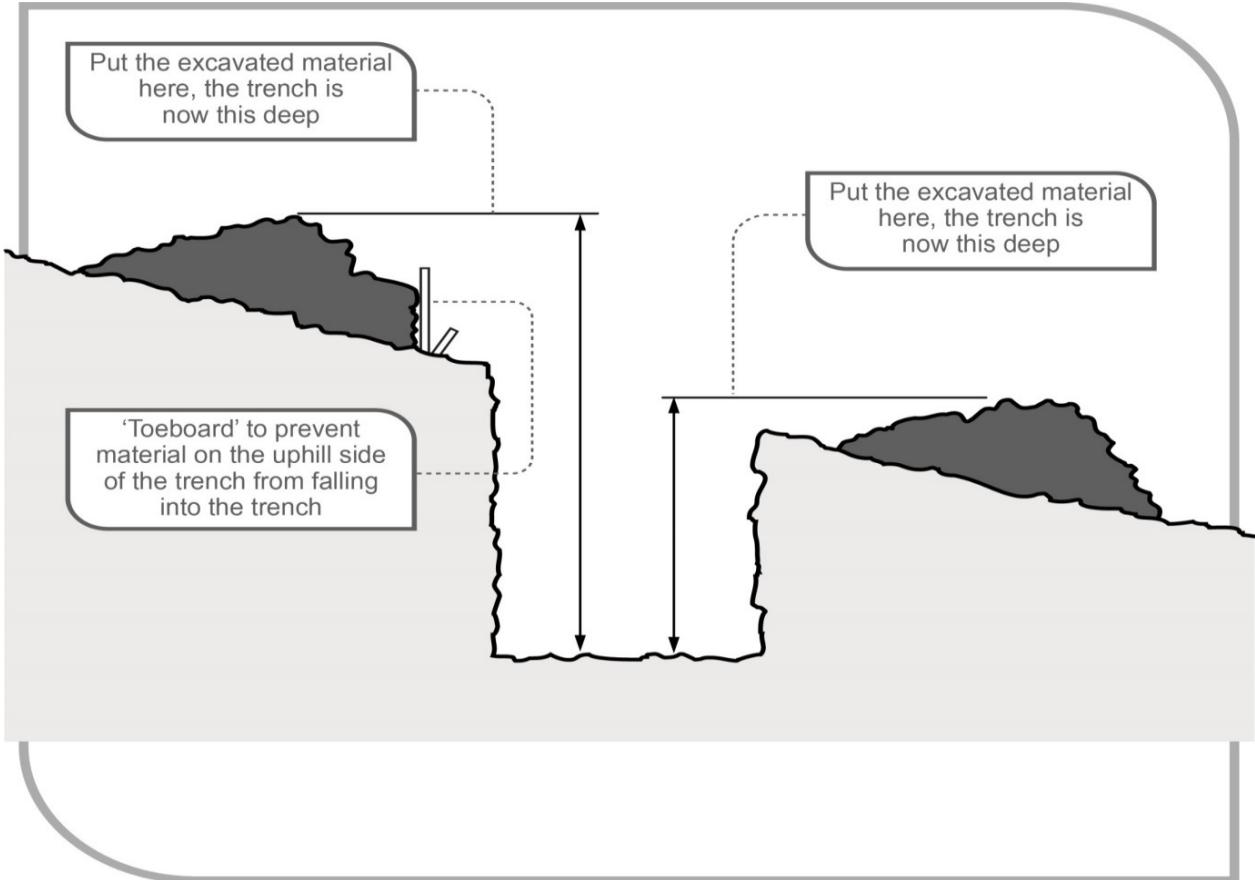 Figure: Placing material on lower side reduces effective depth
Confined Space Considerations
Deep Excavations May Be Confined Spaces:
- Limited entry/exit
- Unfavorable atmosphere
- Not designed for continuous occupancy
When Confined Space: Apply confined space requirements:
- Atmospheric testing
- Ventilation
- Entry permits
- Rescue procedures
Dewatering
Water in Excavation:
- Destabilizes walls
- Slip/drowning hazard
Controls:
- Pump out water
- Cut off water source
- May require engineered dewatering system
- Monitor wall stability (water removal can cause collapse)
Practical Example
Scenario: Excavating trench for sewer line (2m deep, 50m long)
Before Excavating:
- Dial Before You Dig - plans obtained
- Services marked (water main, electricity, telecommunications)
- Cable locator confirms positions
- Hand dig trial holes - services exposed and confirmed
- SWMS prepared
During Excavation:
- Excavator maintains 500mm clearance from services
- Hand dig close to services
- Walls battered 1:1 (stable clay soil)
- Ladder every 15m
- Barriers 1.5m from edges
- Daily inspections before work
Result: Excavation completed safely, no service strikes, no collapses.