Risk Management Process
The four-step loop every WHS code is built on: identify hazards, assess risks, control risks, review controls.
- Always work to eliminate the hazard first; PPE is the last resort.
- Walk the workplace and consult workers — they see hazards supervisors miss.
- From 1 July 2026, complying with this code (or an equivalent/higher standard) becomes a duty under the model WHS laws.
- A simple risk register is the easiest record to keep — and the first thing a regulator asks for.
- Review controls after any change (people, plant, process, legislation) — don't assume old controls still work.
1. Who's responsible
PCBU duties (WHS Act s.19)
- Eliminate risks so far as is reasonably practicable; if not, minimise them.
- Apply the 4-step risk management process and the hierarchy of control.
- Consult workers directly affected — including contractors, on-hire, apprentices, volunteers.
- Manage supply-chain pressures (deadlines, delivery windows) that can erode safety.
Officer due diligence (s.27)
- Understand the hazards and risks of the business.
- Provide resources and processes to eliminate or minimise them.
- Build personal WHS competency; verify the system actually works.
Worker duties (s.28)
- Take reasonable care for own and others' safety.
- Follow reasonable instructions; use PPE as trained.
- Raise concerns and report problems promptly.
2. The 4-step process
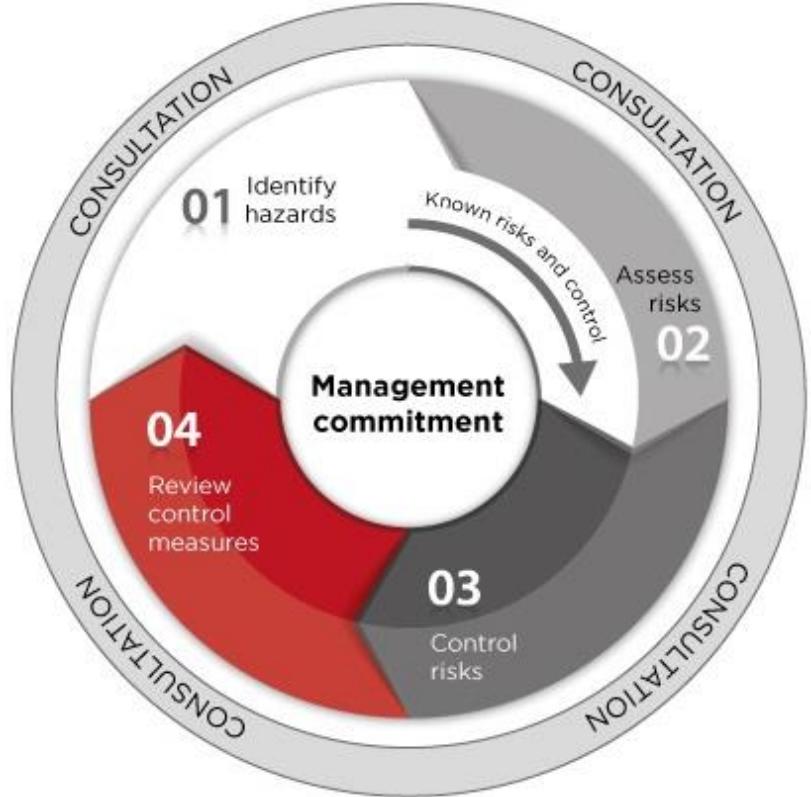 Figure 1 — The risk management process. Four steps that loop: identify → assess → control → review.
Step 1 — Identify hazards
- Walk the site regularly; observe how work is actually done, not how procedures say it should be done.
- Consult workers about near misses, incidents, ergonomic strain.
- Review: SDSs, manufacturers' instructions, incident records, sick-leave patterns, inspection results.
- Check supply-chain partners (deliverers, hirers) for hazards they import.
- Maintain a running hazard list.
Step 2 — Assess risks
- For each hazard: how severe could the harm be, how likely is it, who is exposed?
- Skip formal assessment only when the hazard is well known and the control is well established.
- Range of methods: 5-minute team huddle → formal risk analysis with specialist input.
Step 3 — Control risks
See §3 for the hierarchy of control. Rules of thumb:
- Pick the highest level of control that is reasonably practicable.
- Combine controls where one alone is not enough.
- Make controls reliable, available, and suited to the actual workplace conditions.
- Train, induct, and assign accountability before the control goes live.
Step 4 — Review controls
Review when:
- A control is found ineffective.
- The workplace changes (new plant, process, person, layout, legislation).
- A new hazard is identified.
- A worker, HSR or HSC asks for a review.
- After any incident or near miss.
3. Hierarchy of control measures
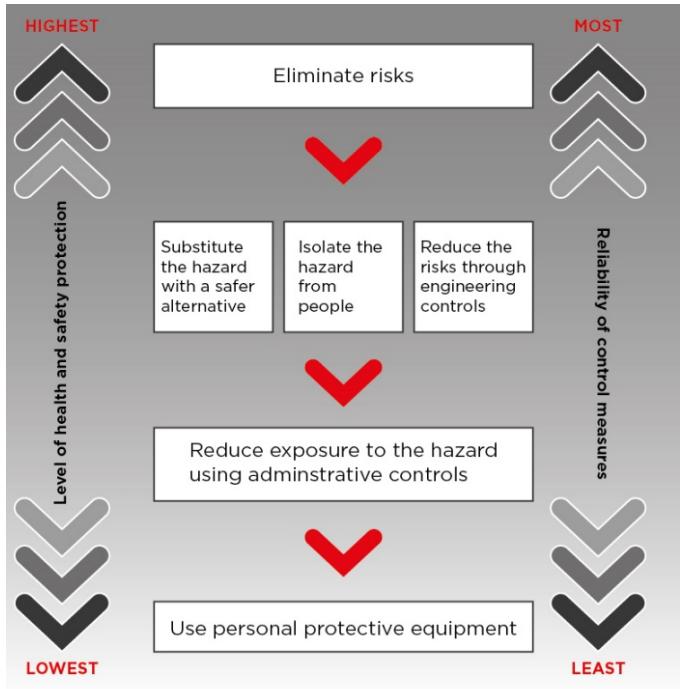 Figure 2 — Hierarchy of control measures. Higher levels are more reliable because they don't depend on human behaviour.
Level 1 — Eliminate (most effective)
- Remove the hazard entirely. Best done at design/planning stage.
- Example: do the work at ground level instead of at height; specify a non-hazardous chemical.
Level 2 — Substitute, Isolate, Engineer
- Substitute: water-based paint instead of solvent; quieter plant for noisy plant.
- Isolate: guardrails to edges, fume cabinets, exclusion zones, remote operation.
- Engineer: machine guards, safety switches, mechanical lifting aids, sound dampening.
Level 3 — Administrative
- Safe work procedures, SWMS, training, signage, rotation, scheduling, exposure-time limits.
- Useful as a layer on top of higher controls — not a replacement for them.
Level 4 — PPE (least effective)
- Hard hats, gloves, hearing protection, respirators, eye protection.
- Only effective if it fits, is worn correctly, is maintained, and is supervised.
Administrative controls and PPE rely on human behaviour and supervision — that's why they sit at the bottom.
4. "How could this go wrong?"
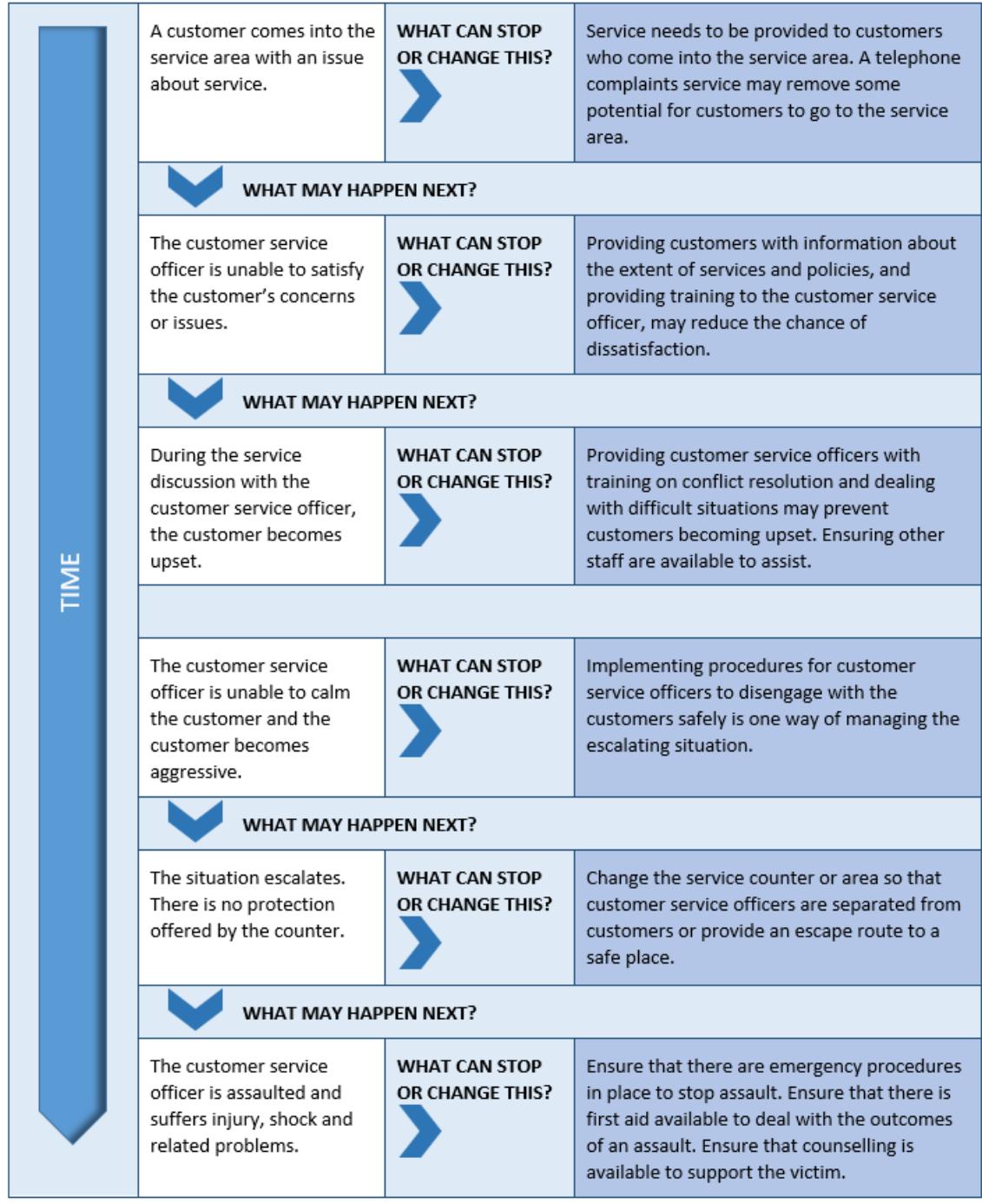 Figure 3 — Tracing the chain from hazard to harm. Useful for assessing low-probability/high-consequence risks.
Walk the chain backwards: what would have to happen for this hazard to harm someone? Each link is a place a control can be inserted.
5. Consultation, training, records
Consultation triggers (full list in whs_consultation_cooperation_coordination):
- When identifying hazards or assessing risks.
- When deciding on controls.
- When proposing a change that affects WHS.
- When developing WHS procedures.
Training
- Induction covering site hazards and the risk management process.
- Task-specific training before any new control goes live.
- Refresher when controls or workers change.
Records to keep (a simple risk register does most of this):
- Identified hazards, assessed risks, chosen controls.
- Who was consulted; when controls were implemented, monitored, reviewed.
- Training records, plans for changes, review dates.
- Specific records mandated by regulation (chemicals, plant, asbestos, confined spaces).
6. Common pitfalls / quick wins
Do
- Walk the floor; observe the actual work — not the SOP.
- Consult workers and HSRs before decisions are locked.
- Eliminate at the design stage — it is far cheaper than retrofitting.
- Keep one running risk register so reviews are easy.
- Re-test controls after any change.
Don't
- Skip assessment because "we know this hazard" — assumptions are how incidents start.
- Jump to PPE as the first control. It's the bottom of the hierarchy for a reason.
- Add a new control without checking it doesn't create a new hazard (e.g. a barrier that creates a blind spot).
- Set and forget — controls drift without review.
- Rely on one-size-fits-all controls; suitability depends on your workplace.
7. Cross-references
- See also: whs_consultation_cooperation_coordination, workplace_environment_and_facilities
- Glossary: glossary_and_key_concepts
- Construction-specific application: see §02 Construction Work
Source: manage_work_health_and_safety_risks.md (Safe Work Australia, model Code of Practice, CC-BY-NC 4.0). Edition: May 2018. Last verified against SWA: 2026-04-27.