Abrasive Blasting
Silica sand is banned in Australia. The substrate may be more dangerous than the abrasive (lead paint, asbestos coatings, RCS in concrete). Air-supplied respirator + enclosed booth where reasonably practicable.
- Silica sand is prohibited as an abrasive media (>1% free crystalline silica).
- Air-supplied respirator AS/NZS 1716 Class CE, mandatory for blasters and pot attendants in any open / unventilated work.
- Dead-man control on the nozzle — releases pressure if dropped.
- Substrate sampling before blasting any old surface (lead, asbestos, PCB).
- Health monitoring mandatory for ongoing silica / lead exposure (Reg 368).
1. Process types
| Method | Notes |
|---|---|
| Dry pneumatic | Air propels abrasive; highest dust risk. |
| Wet | Abrasive + water near nozzle for dust suppression; chromate/nitrate inhibitors restricted. |
| Cabinet | Enclosed; operator at viewing window; usually no RPE if maintained. |
| Blast room / chamber | Operator inside, hood/helmet airline respirator. |
| Vacuum | Shroud + seal + vacuum debris removal; only effective with seal intact. |
| Centrifugal wheel | Inside an enclosure; lowest operator exposure. |
| Emerging | Sodium bicarbonate, sponge, dry-ice (CO₂). |
2. Prohibited media
| Media | Status |
|---|---|
| Silica sand (>1% free crystalline silica), incl. beach/river/pool-filter sand | Banned in Australia |
| Arsenic | >0.1% prohibited |
| Beryllium | >0.1% prohibited |
| Cadmium | >0.1% prohibited |
| Lead | >0.1% (or operator exposure > WHS limit) prohibited |
| Antimony, cobalt, nickel, tin | >0.1% each prohibited |
| Chromium | >0.5% restricted in dry; chromate/nitrate/nitrite restricted in wet |
| Radioactive | >1 Bq/g prohibited |
3. Acceptable abrasives
- Steel grit / shot, chilled iron grit (recyclable, low shatter).
- Garnet (verify low silica), aluminium oxide.
- Crushed glass, glass beads, plastic beads, sodium bicarbonate.
- Metal slag — verify content with supplier's analysis certificate.
- Dry ice.
Recycled abrasive must be verified before reuse — toxics (lead) and respirable silica concentrate during recycling.
4. Substrate hazards (often the bigger risk)
| Substrate | Hazard |
|---|---|
| Lead paint (>1% by dry weight) | Reg 392 lead-process; mandatory health monitoring. Blood-lead thresholds: 5 µg/dL reproductive females, 20 µg/dL others. |
| Concrete, sandstone, brick | RCS dust → silicosis. |
| Asbestos coatings (textured paint, vinyl tile, fibre-cement, plaster) | Sample + NATA analysis before blasting. High-pressure water/air on ACM is prohibited. |
| PCB-coated surfaces | Prohibited as wet additive; specific decontamination required. |
5. Engineering controls — order
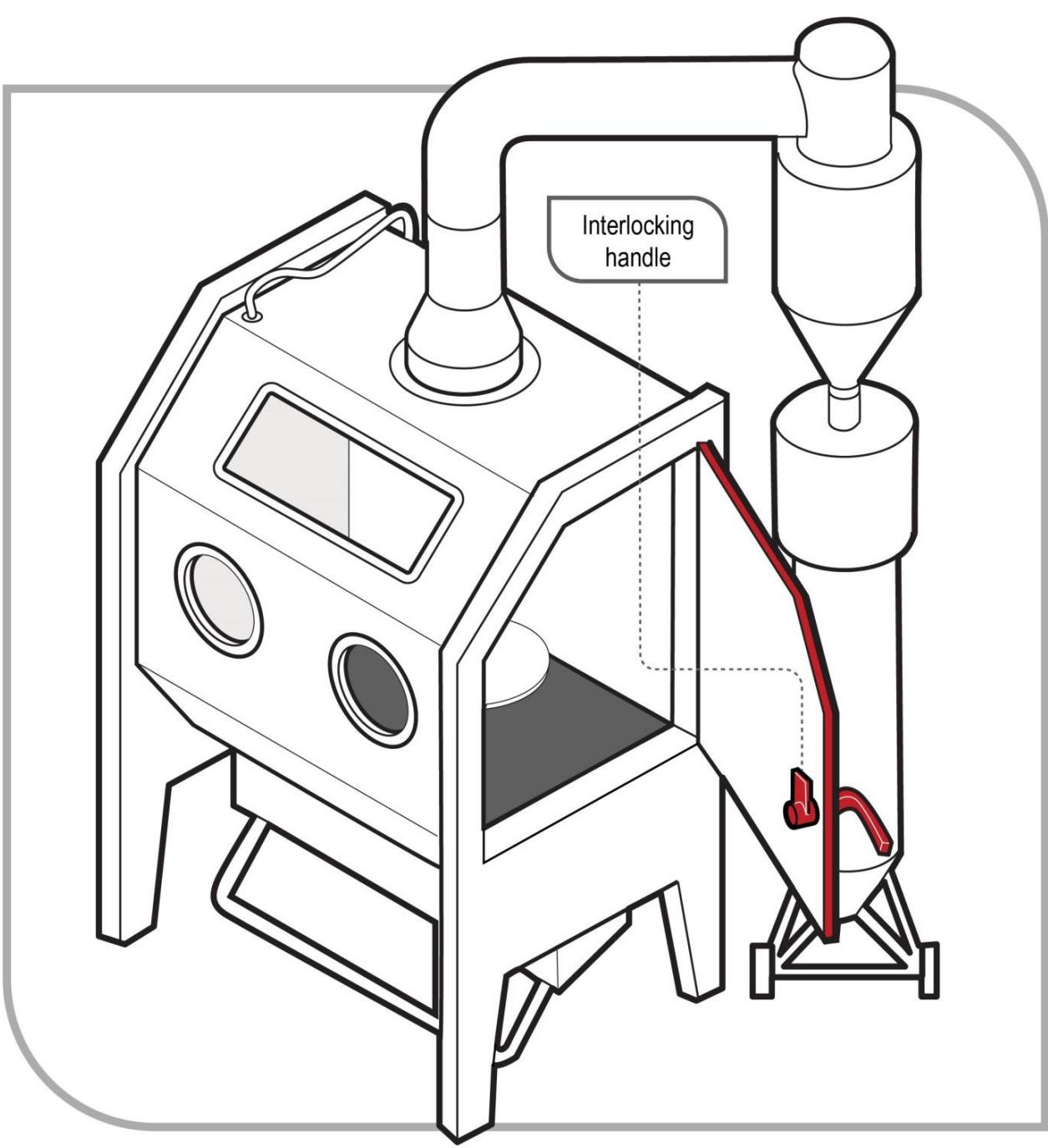 Figure 1 — Cabinet blasting: fully enclosed, operator outside at viewing window. The cleanest workflow for small parts.
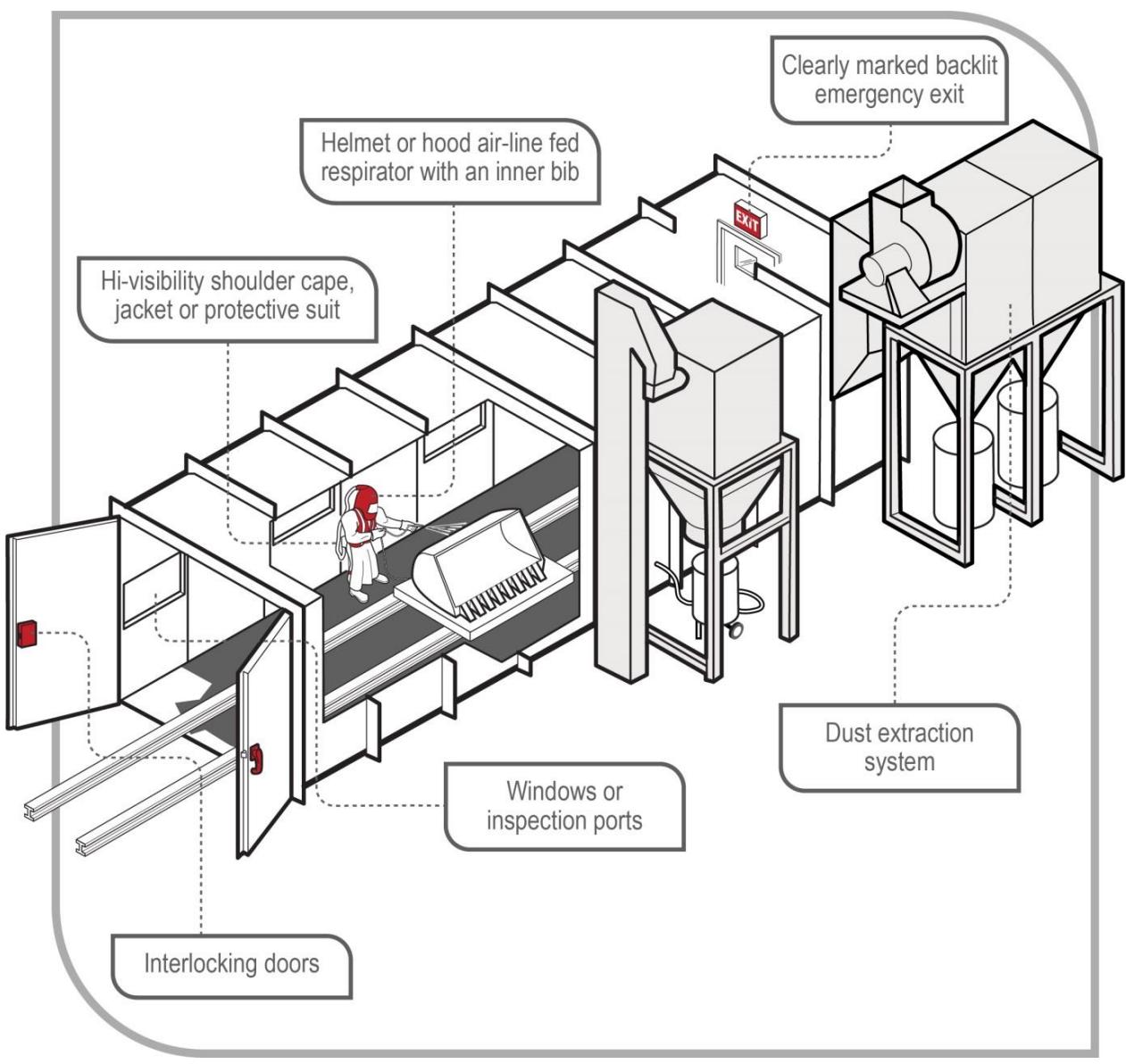 Figure 2 — Blast room/chamber: operator inside wearing hood/helmet airline respirator (170 L/min continuous, AS/NZS 1716 Class CE). Mechanical exhaust runs ≥ 5 min after blasting before unmasking.
- Eliminate: chemical stripper, heat gun, power tools with dust collection, manual sand.
- Isolate: cabinet → blast room → temporary enclosure → vacuum blasting.
- Engineer: mechanical exhaust 0.3–0.4 m/s air velocity; recirculation + filtration; cyclones; airwashes.
- Admin: exclusion zones (extended downwind), schedule outside normal hours, cease in wind, wet vacuum / HEPA housekeeping.
- PPE (always required for blasters): air-supplied hood/helmet AS/NZS 1716 Class CE.
6. Open-air work — exclusion zones
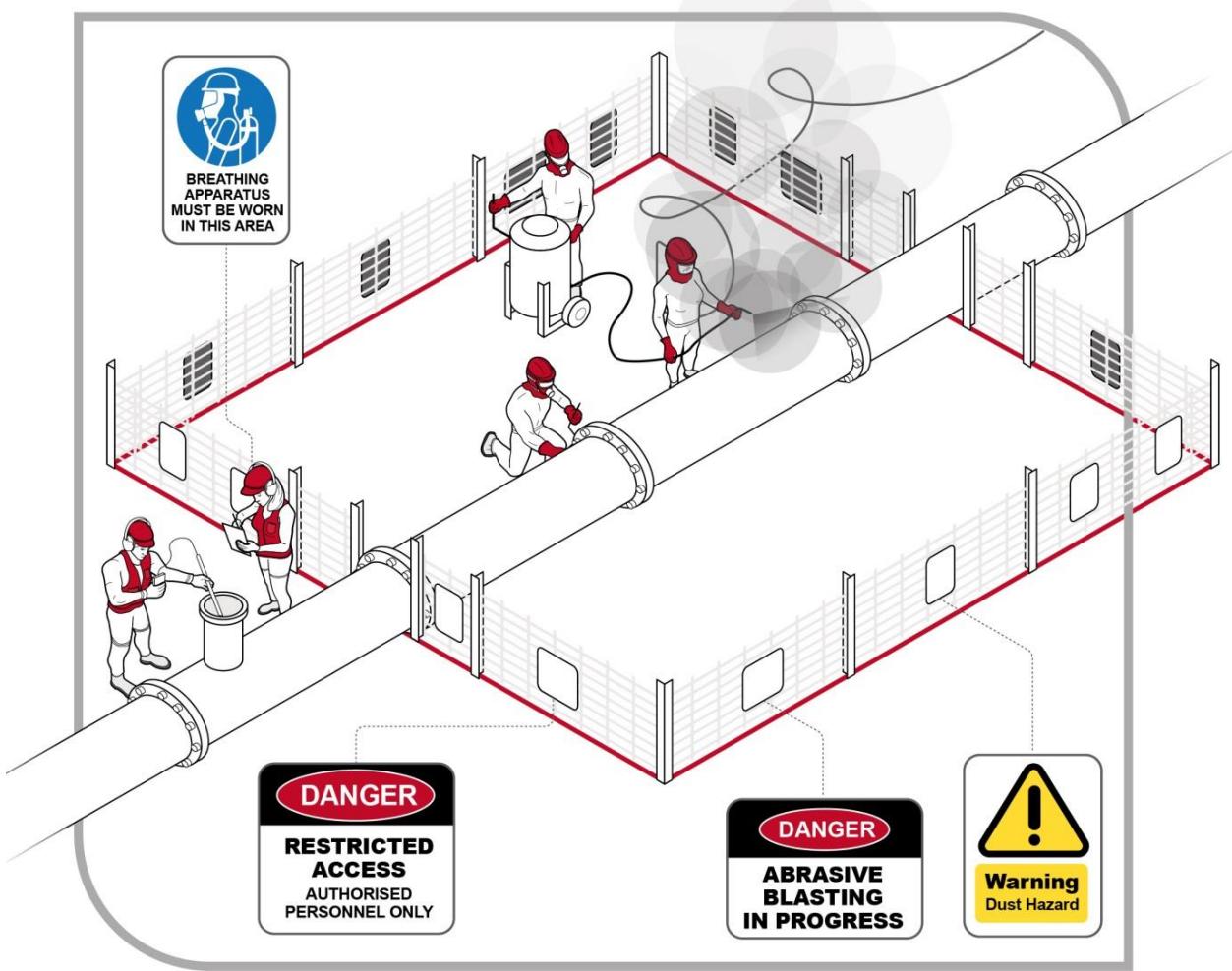 Figure 3 — Exclusion zone for open-air blasting. Buffer extends downwind; signed; barricaded; no unauthorised entry. Size determined by risk assessment + wind.
- Signage: "Abrasive blasting in progress — authorised only — RPE required".
- Cease blasting in wind (compromises exclusion zone).
- Tear-resistant screens (polypropylene; not porous cloth) for temporary enclosures.
- 2 m vertical extension on enclosure tops.
7. Dead-man control & whip
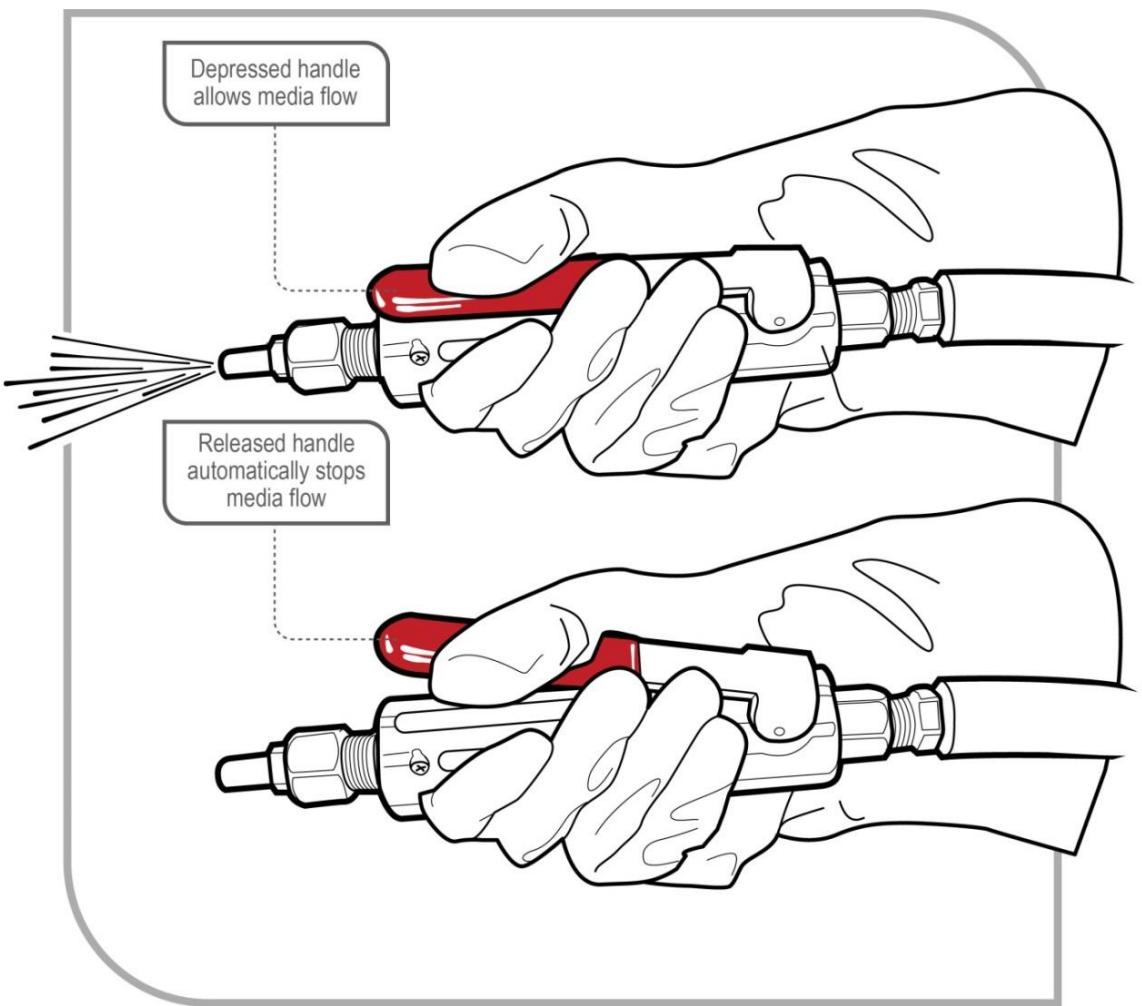 Figure 4 — Nozzle dead-man control: releases air pressure when the operator's hand is removed. Mandatory; pneumatic for hose < 40 m, electric for > 40 m.
- Anti-static hose with earth wire.
- Hose whip-checks at every coupling.
- Coupling safety locks.
- Hose straight or coiled when not in use.
8. Air-supplied respirator (mandatory)
- AS/NZS 1716 Class CE — air-supplied hood/helmet, positive pressure, 170 L/min continuous at the regulator (more if cooling suit).
- Inner bib, hi-vis cape.
- AS/NZS 1715 breathing-air quality (dry, oil-free, CO alarm).
- Individually fitted; disinfected if shared.
- Headbands, valves, face piece checked before each use.
- Pot attendant: air-purifying respirator backup during maintenance / shutdown.
9. Noise
- Nozzle discharge: 112–119 dB(A) typical; peak to 145 dB(C) at "abrasive runs out".
- Cabinet operators: 90–101 dB(A) — only ~12 min unprotected per 8-h shift to stay under 85 dB(A) Aeq.
- Sound-absorbent enclosures, mufflers, silencers + HPDs + audiometric testing.
- See managing_noise_and_preventing_hearing_loss.
10. Health monitoring (Reg 368)
Mandatory for ongoing exposure to silica, lead, asbestos, cadmium, arsenic, chromium, cobalt:
- Biological monitoring (blood lead, urine chromium etc.).
- Chest X-ray, spirometry for silica.
- 30-year record retention (40 for asbestos).
- Worker informed pre-engagement; medical practitioner supervision.
11. Records & training
- Air-monitoring results — 30 yrs.
- Plant inspection logbook — daily operator + competent-person periodic.
- Health-monitoring reports — confidential, 30 yrs (40 asbestos).
- Substrate-test results, NATA analysis (where applicable).
- Training: PPE use/maintenance/storage, hazard recognition, emergency procedures, first aid.
12. Common pitfalls / quick wins
Do
- Verify abrasive certificate before purchase — written silica % from supplier.
- Sample old paint and old surfaces before any blasting.
- Maintain the vacuum-blast seal; train operators not to lift the nozzle off the surface.
- Run baseline blood-lead before any lead-paint work; periodic during.
- Run audiometric testing for cabinet operators; noise is often missed.
- Verify cabinet maintenance (door seals, viewing window, exhaust filter) before "no PPE" assumption.
Don't
- Use silica sand. Banned, full stop.
- Skip air monitoring "because we always blast garnet" — different hose, different substrate, different result.
- Let pot attendants near a depressurised pot without RPE.
- Recycle abrasive without cleaning verification.
- Blast asbestos coatings with air or high-pressure water.
13. Cross-references
- See also: welding_processes, spray_painting_and_powder_coating
- RCS detail: respirable_crystalline_silica (Phase 4, §07)
- Asbestos: manage_and_control_asbestos / safely_remove_asbestos (Phase 4)
- Noise: managing_noise_and_preventing_hearing_loss
- Glossary: glossary_and_key_concepts
Source: model_code_of_practice_abrasive_blasting.pdf (Safe Work Australia, model Code of Practice, CC-BY-NC 4.0). Edition: August 2021 (carries Jul 2020 GHS Rev 7 amendment; supersedes May 2018). Last verified against SWA: 2026-04-28.