Safely Remove Asbestos
Enforcement-heavy. Class A always notifiable. Independent licensed assessor for air monitoring + clearance. Wet methods + decontamination + double-bagged disposal. Don't shortcut any of it.
- Until 30 November 2026: comply with the existing WES for respirable asbestos (0.1 fibres/mL 8-hour TWA).
- From 1 December 2026: SWA classifies asbestos as one of the 33 Non-Threshold Genotoxic Carcinogens (NTGCs) with no numerical exposure limit — duty becomes eliminate or replace in the standard hierarchy.
- The operational clearance air-monitoring thresholds used in this Code (0.01 / 0.02 f/mL — see §11) derive from the Code itself, not from the WES list, and remain in force post-transition.
- Watch for SWA guidance on regulating NTGCs under the model WHS laws (under development through the transition).
- Class A licence: any quantity / type, including friable + ACD.
- Class B licence: non-friable + associated ACD only.
- No licence: < 10 m² non-friable, or minor ACD.
- Independent Licensed Asbestos Assessor (LAA) required for Class A air monitoring + clearance.
- Asbestos Removal Control Plan (ARCP) is mandatory for licensed work (Reg 466).
- Air-monitoring action: 0.01 fibres/mL (review controls); > 0.02 fibres/mL = stop work + notify regulator.
1. Licence classes
| Class | Scope |
|---|---|
| Class A | Any quantity / type — incl. friable asbestos + asbestos-contaminated dust (ACD). |
| Class B | Non-friable ACM (any amount) + ACD associated with non-friable removal only. |
| No licence | < 10 m² non-friable, or minor ACD. Still subject to Chapter 4 controls (wet methods, decon, PPE, disposal). |
Class B supervisor must be readily available (contactable, on site within ~ 20 min).
2. Notifiable removal
- Class A — always notifiable.
- Class B — some quantities notifiable (jurisdictional thresholds apply).
- Written notice ≥ 5 days before commencement, stating:
- Business name, ABN, licence number.
- Supervisor + LAA names.
- Client + workplace details.
- Friable / non-friable classification.
- Enclosure method (if friable).
- Estimated quantity, worker count, competency.
- Emergency removal (unplanned exposure / equipment failure): notify regulator by phone immediately; written statement within 24 h.
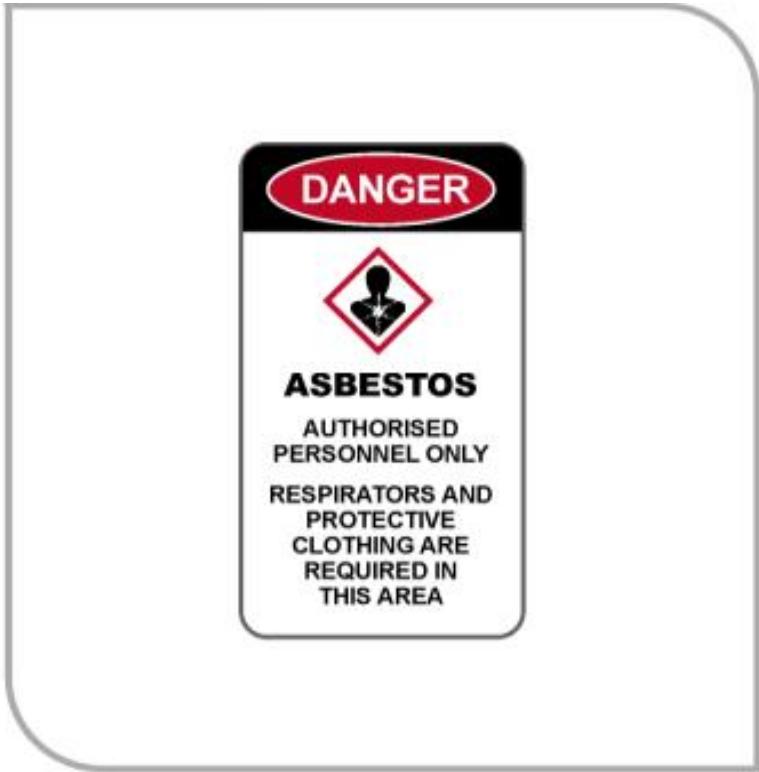 Figure 1 — Standard "Asbestos Removal Area" warning sign per AS 1319. Posted at every entry to the work area.
3. Independent Licensed Asbestos Assessor (LAA)
Required for Class A:
- Air monitoring during removal.
- Clearance inspections.
- Clearance certificate issuance.
May also identify ACM, conduct risk assessments, review registers (if competent).
4. Asbestos Removal Control Plan (ARCP) — Reg 466
Mandatory for licensed work. Documents:
- Nature & scope of removal.
- Hazard identification + risk controls.
- Roles, responsibilities, supervision.
- Enclosure design + smoke-test integrity (friable).
- Decontamination facilities + procedures.
- Waste containment + disposal route.
- PPE / RPE selection + fit-testing.
- Air monitoring + action levels.
- Emergency procedures.
- Health & safety induction.
- Contact details for all parties.
5. Health monitoring of removal workers
| Time | Component |
|---|---|
| Baseline (pre-commencement) | Demographic / occupational / medical history; standardised respiratory questionnaire; spirometry; physical exam (chest). |
| Ongoing | At least every 2 yrs while exposure risk continues. |
| Post-removal | As determined by medical practitioner. |
| Records | Confidential, 40-year retention. |
PCBU pays all costs. Worker receives a copy. Regulator notified if disease / injury indicated.
6. PPE / RPE
Coveralls — disposable Type 5 or 6; discard after each shift if contaminated.
Respiratory protection — by task:
| Removal type | Minimum RPE |
|---|---|
| Friable, dry method | Air-line respirator, belt-mounted backup filter; positive-pressure for medical-contraindication workers. |
| Friable, wet method | Full-face P3 negative-pressure or PAPR. |
| Non-friable | Half-face P2 minimum (full-face P3 preferred when uncertain). |
| Glove bag | Half-face P1 acceptable. |
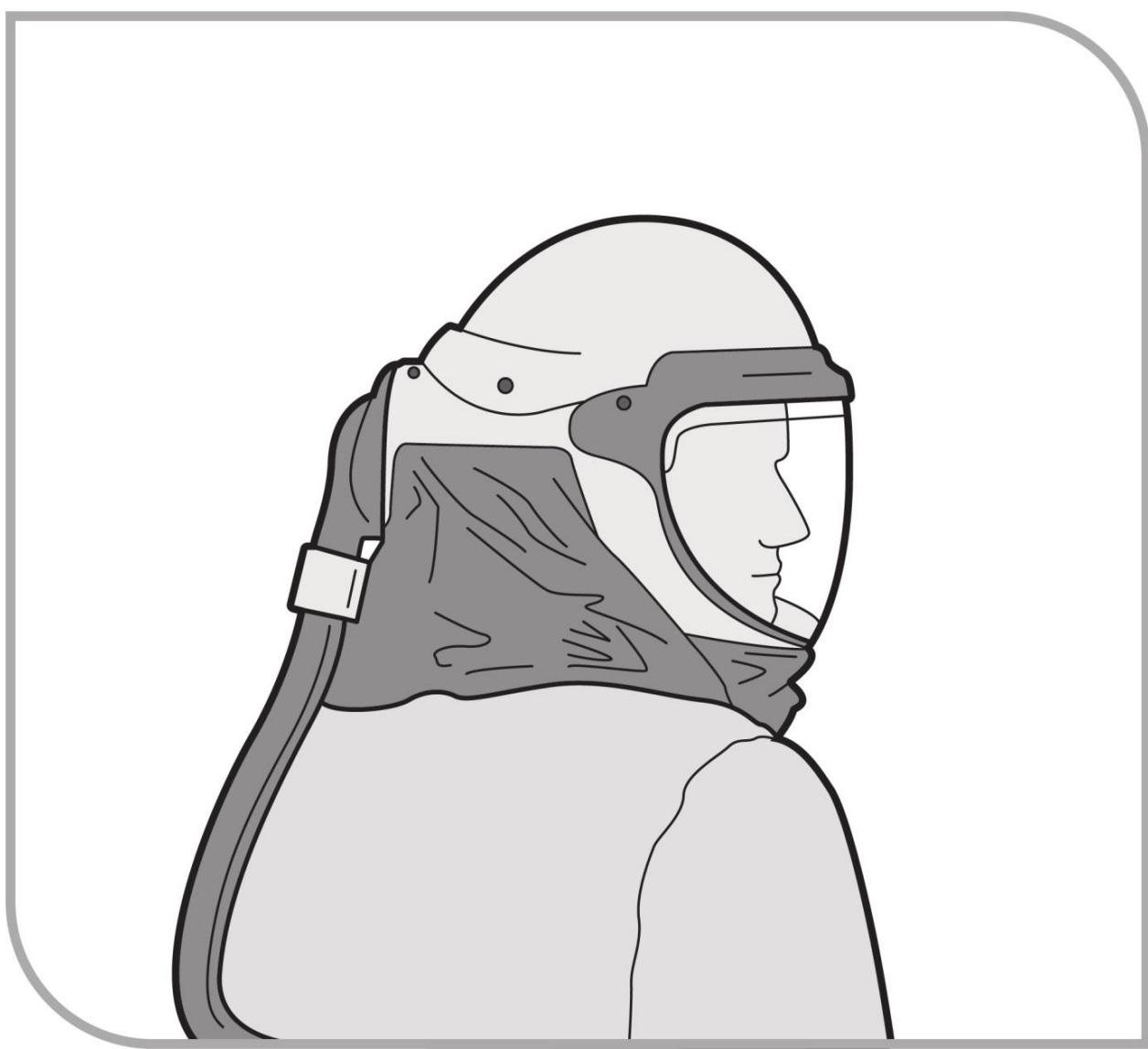 Figure 2 — PAPR (Powered Air-Purifying Respirator). Preferred for prolonged friable work; battery + blower draws air through HEPA filter into a hood.
- Quantitative fit-test before first use; repeat when changing model / size.
- Pre-use inspection: straps, face piece, valves, seals.
- Replace filters when damaged or breathing resistance increases.
- Non-disposable RPE decontaminated before leaving the work area.
- Clean-shaven required for tight-fitting RPE.
Gloves & boots: heavy-duty latex / nitrile; disposable or decontaminated.
7. Decontamination unit (3-stage for friable)
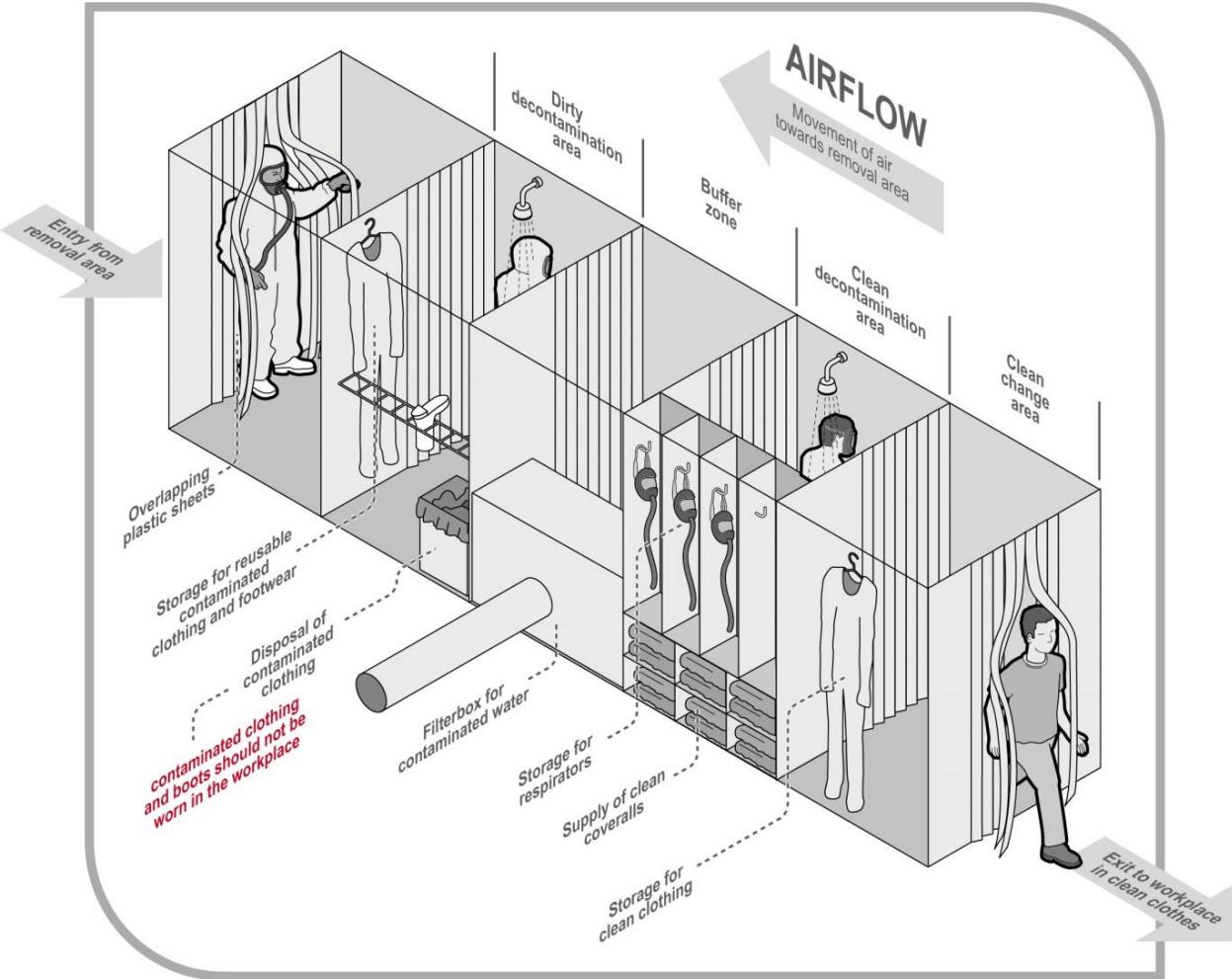 Figure 3 — Three-stage mobile decontamination unit. Dirty area → shower → clean area, with airlocks (one-way airflow). All shower water filtered to ≤ 5 µm before sewer discharge.
Design
- Dirty (immediate post-work clothing removal).
- Shower (water + soap + towels).
- Clean (redress in clean clothes).
- Adjacent to the enclosed work area; directly connected by airlock.
- Hinged flap doors (one-way valve airflow).
- All water filtered to ≤ 5 µm before sewer discharge.
- No smoking, eating, drinking in any zone.
Remote unit (when not adjacent): plus a 3-stage isolated changing area attached to the enclosure; workers strip outer PPE in enclosure, transit in fresh coveralls to the remote facility. Access route air-monitored, barricaded.
8. Wet methods (preferred)
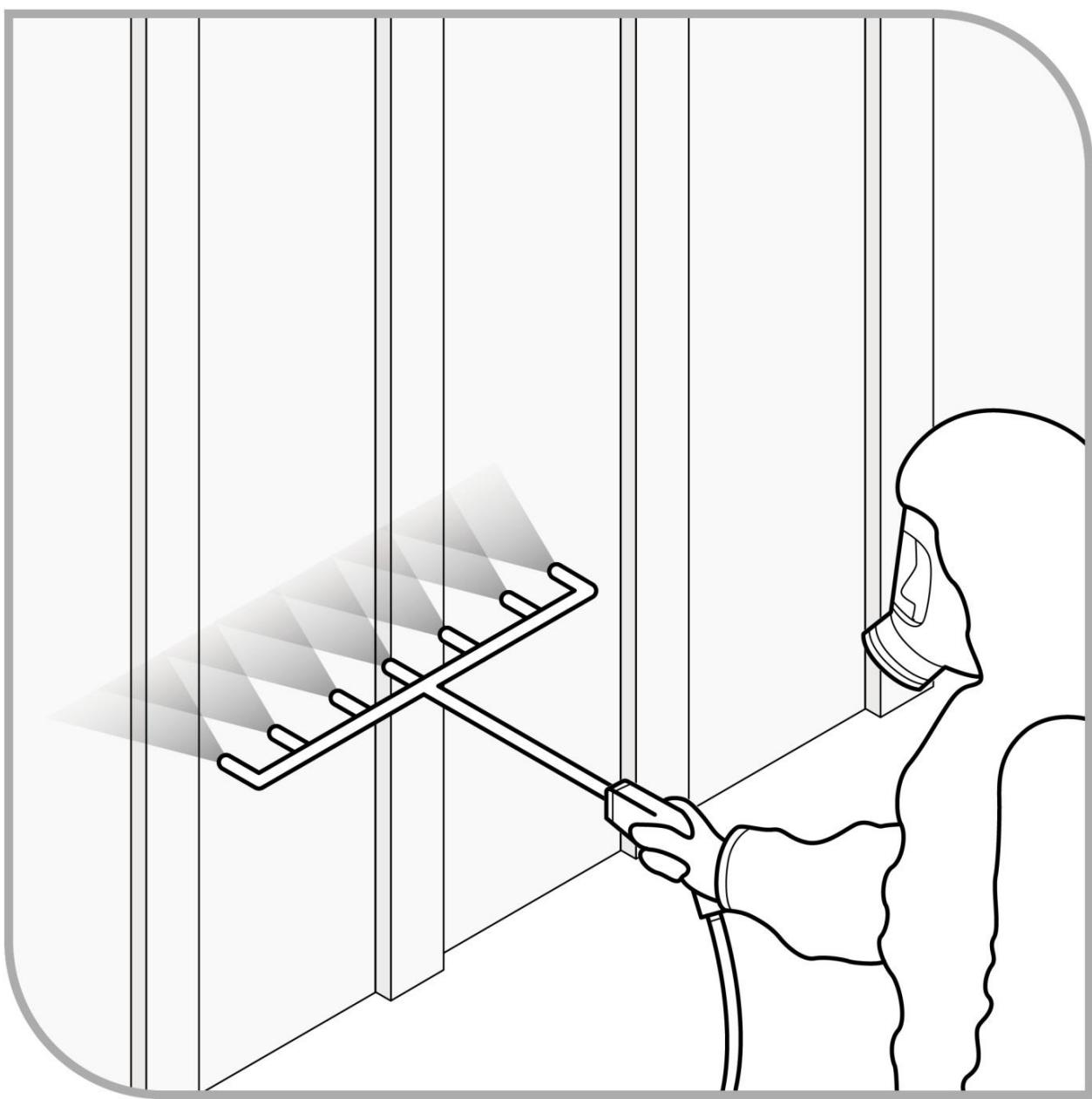 Figure 4 — Wet spray method: water + surfactant applicator saturates the asbestos surface continuously during removal. Cuts fibre release dramatically; doesn't eliminate it (RPE still required).
- Wet spray: fine mist / spray with surfactant; saturate before cutting; maintain wet throughout. Pair with HEPA H-class vacuum.
- Saturation / water injection (friable): inject water via multi-hole applicator head; soak through full depth.
- Dry method (only when wet not feasible — electrical hazard, water damage): still requires negative-pressure enclosure + Class A licence for friable; air-line RPE + backup filter.
9. Glove bag (small, contained jobs)
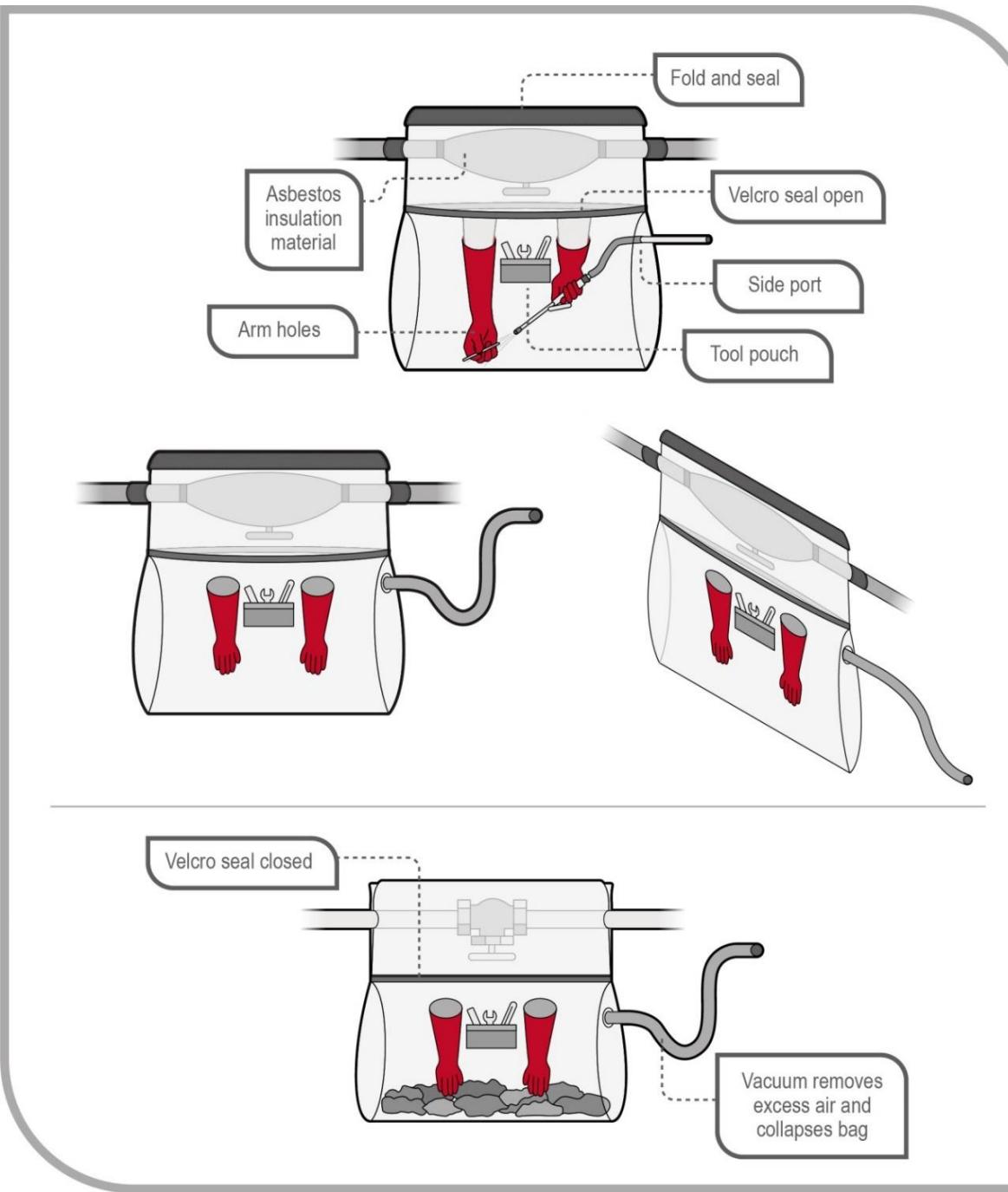 Figure 5 — Glove bag method for small lagging removal. Sealed bag with built-in gloves and tool access; HEPA vacuum evacuates fibres post-removal. Standard for valve / pipe joints.
10. Negative-pressure enclosure (friable removal)
Construction
- Heavy-duty polyethylene sheeting (≥ 200 µm, new, not recycled).
- Enclose all walls, windows, doors, ceiling; perspex viewing panels.
- Airlocks at decon entry (double overlapping polyethylene).
- Floor protection (woven polyethylene, 300 mm overlap, taped).
- All movables removed; fixtures covered & sealed.
Negative pressure system
- Exhaust units draw air outward; net inward airflow at openings.
- Tested for leaks before commencement (smoke test).
- Dismantled only after air monitoring ≤ 0.01 fibres/mL.
11. Air monitoring during removal
| Result (fibres/mL) | Action |
|---|---|
| < 0.01 | Continue current controls. |
| 0.01–0.02 | Review & investigate; implement additional controls. |
| > 0.02 | Stop work immediately. Notify regulator phone + written within 24 h. Investigate (enclosure leaks, seal failures, equipment defects). Extend isolation. Wet-wipe + vacuum surrounding area. Re-seal + smoke-test. Resume only after monitoring ≤ 0.01 fibres/mL. |
Conducted by:
- Class A: Independent LAA (mandatory).
- Class B: LAA or competent person.
Results communicated to: workers, HSRs, other PCBUs, occupants (residential).
Records: 30 years, accessible.
12. Clearance inspection & certificate
Mandatory after licensed work, before re-occupation.
- Class A: Independent LAA only.
- Class B / non-friable > 10 m²: Independent competent person.
Includes:
- Visual inspection of enclosure dismantling (if used).
- Surface contamination assessment.
- Lab analysis of samples if needed.
- Confirms fibre levels safe for re-occupation.
No clearance certificate = no re-occupation. Legal requirement.
13. Waste disposal
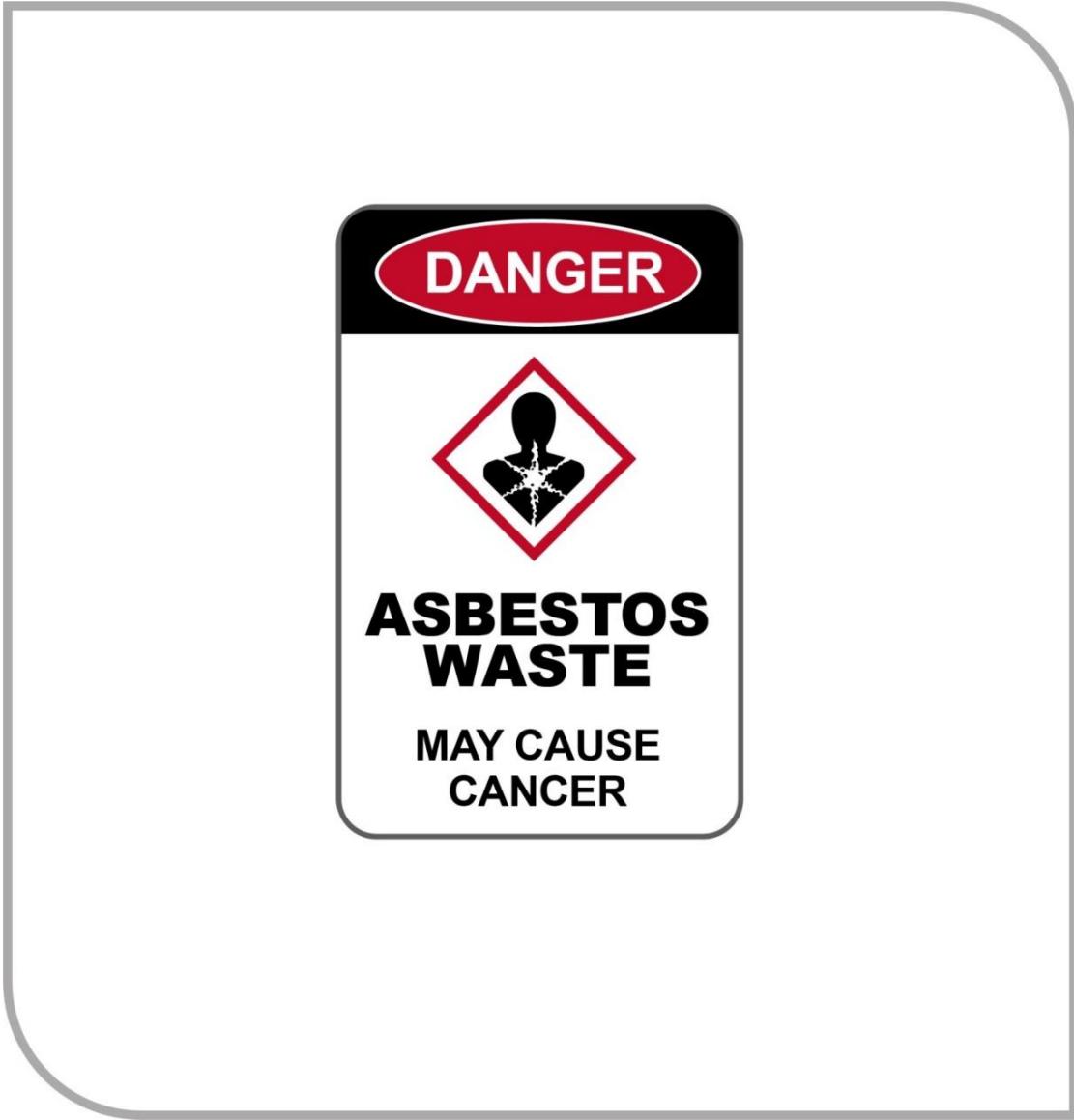 Figure 6 — Asbestos waste drum: "Danger: Asbestos — Do not break seal." GHS-compliant labelling; placed top + side of drums and bins.
- Double bagging — inner sealed with cloth tape ("goose-necking"); exterior decontaminated and wiped before removal from work area; outer bag applied outside decon zone.
- Polyethylene bags ≥ 200 µm, new; max 1200 × 900 mm; ≤ half full.
- Drums / bins ≥ 200 µm polyethylene-lined; solid, good condition, sealed rims.
- Skips / vehicle trays double-lined polyethylene or double-bagged contents.
- Licensed disposal at an EPA-approved asbestos landfill, transported by a licensed carrier — as soon as reasonably practicable.
- Contaminated PPE: sealed labelled container; disposed as asbestos waste or laundered at a specialist facility (never home laundry); clothing removed damp, wetted, bagged before transit.
14. Emergency procedures (unplanned exposure)
- Stop work.
- Notify regulator (phone + written).
- Investigate cause.
- Implement controls to prevent further release.
- Resume only after monitoring ≤ 0.01 fibres/mL.
15. Records (long-term)
| Record | Retention |
|---|---|
| Health monitoring | 40 years (confidential) |
| Air monitoring | 30 years (accessible to workers) |
| Training & competency | Employment + 5 yrs |
| Asbestos Removal Control Plan | On file during work |
| Daily decon / supervisory log | On file |
| Clearance certificate | On file (and copy to client) |
16. Common pitfalls / quick wins
Do
- Notify the regulator 5 days ahead for Class A. Emergency exception is for actual emergencies, not poor planning.
- Use independent LAA — same firm doing the removal can't sign off the clearance.
- Pair wet method with HEPA vacuum — wet alone doesn't capture all fibres.
- Smoke-test the enclosure before removal starts.
- Stop and notify the moment air monitoring breaches > 0.02 fibres/mL.
- Send contaminated PPE to a specialist laundry; never home-launder.
- Quantitative fit-test annually; record per worker, per RPE model.
Don't
- Reuse polyethylene sheeting — pinholes invisible to the eye.
- Run a friable removal without a 3-stage decon adjacent to the enclosure.
- Re-occupy without a clearance certificate.
- Dispose of asbestos waste at a non-licensed facility.
- Skip baseline health monitoring "to save time".
- Treat 9 m² of non-friable as "below the licence threshold" without confirming jurisdictional rules — some are stricter.
17. Cross-references
- Within §07: manage_and_control_asbestos, respirable_crystalline_silica
- Renovation / demolition: demolition_work, general_construction_work (Reg 291 HRCW: any work likely to disturb asbestos)
- Confined-space rescue principles: confined_spaces
- Foundations: risk_management_process
- Glossary (Class A / B licence, LAA, ACM, ACD, PAPR, HEPA): glossary_and_key_concepts
Source: safely_remove_asbestos.md (Safe Work Australia, model Code of Practice, CC-BY-NC 4.0). Edition: July 2020. WES → WEL transition 1 Dec 2026: asbestos reclassified as NTGC with no numerical limit; eliminate / replace duty applies. WES (0.1 f/mL 8-h TWA) remains in force until 30 Nov 2026. Code-derived 0.01 / 0.02 f/mL clearance thresholds unaffected. Last verified against SWA: 2026-04-28.