Safe Design of Structures
Eliminating hazards at the design stage is far cheaper and far more effective than retrofitting controls during construction or maintenance. Designers carry a duty under WHS Act s.22.
Re-baselined against the SWA November 2024 model edition on 2026-04-28 (supersedes the October 2018 source). Designer-duty framework (s.22, Reg 295) and the five elements of safe design carry forward unchanged; cross-check the Nov 2024 PDF for any binding-agreement reference.
- Designer duty (s.22) covers structures used as workplaces — and any domestic residence at any lifecycle stage where someone is doing work (construction, maintenance, demolition).
- Apply the hierarchy of control at every design stage; don't defer it to construction.
- Designer must produce a written safety report on hazards unique to the design (Reg 295) and pass it down the chain.
- The cheapest safety intervention happens before drawings leave concept stage.
- Consult the client, the builder, end-users and the FM team — early.
1. Who's responsible
Designer (PCBU under s.22)
- Architects, engineers, building designers, surveyors, drainage/services designers.
- Anyone making decisions that affect H&S outcomes — including contractors doing temporary-works design.
- A PCBU who alters a design themselves becomes the designer.
Designer must, so far as is reasonably practicable:
- Design the structure to be without risks during construction, use, maintenance, and demolition.
- Carry out (or arrange) the calculations, testing, examination needed.
- Provide adequate written information to those who construct, operate, maintain, modify or demolish — design purposes, results, and conditions for safe handling.
Client commissioning the work
- Provide site/usage information to the designer (existing hazards, future activities, ACM, services).
- Pass the designer's safety report to the principal contractor.
- Approve design decisions affecting H&S.
Concurrent duties — where multiple parties hold the same duty, each retains responsibility to the extent they can influence and control the matter (s.16).
2. The framework
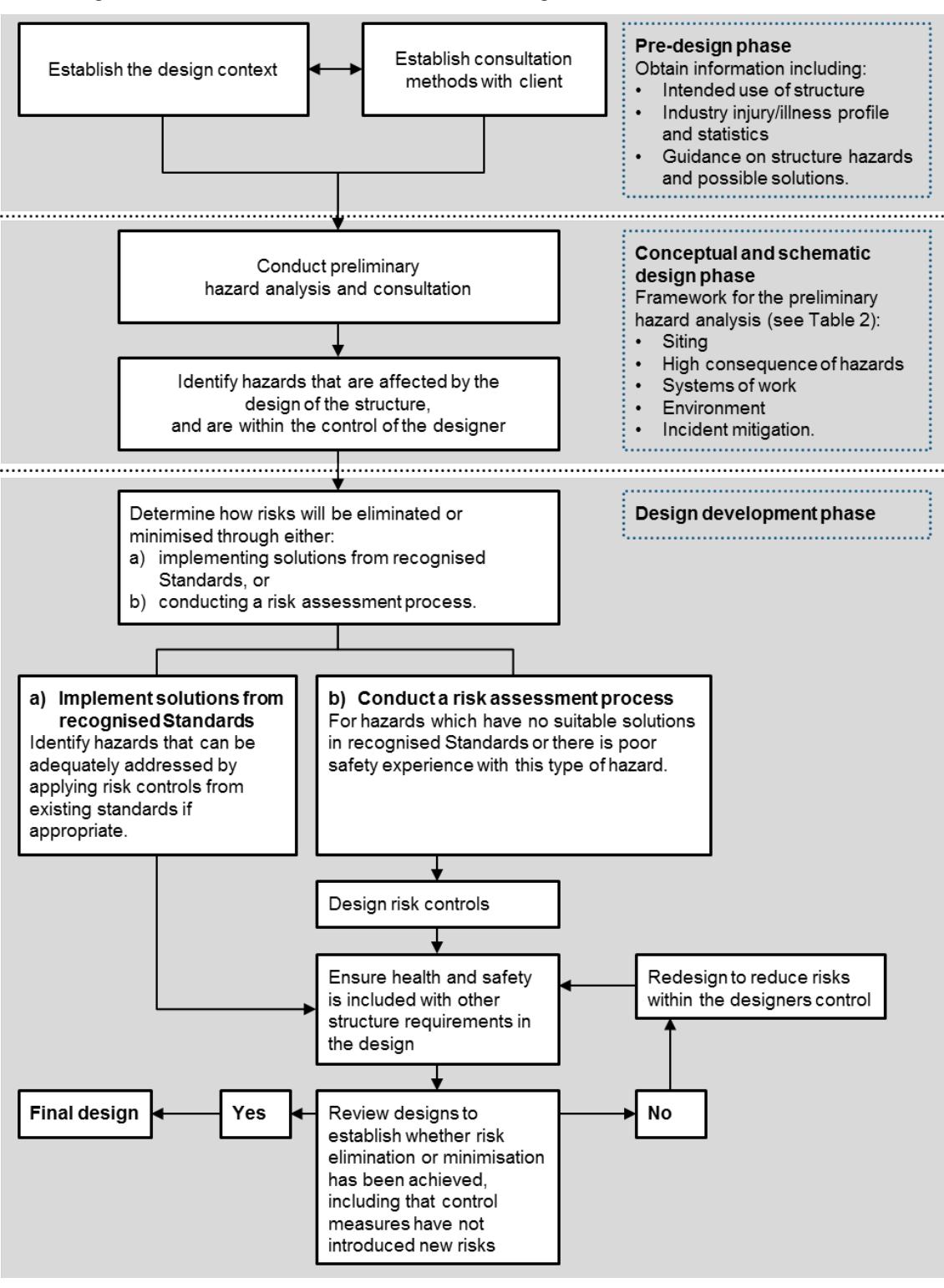 Figure 1 — Integrating design and risk management. The same 4-step process from risk_management_process applied across pre-design, concept, schematic, detail, construction and handover stages.
3. Five elements of safe design
The code presents these as the integrated way of working:
- Lifecycle thinking — consider construction, commissioning, use, maintenance, refurbishment, modification, decommissioning, demolition, disposal. Decisions made at concept echo for 50+ years.
- Knowledge & capability — WHS legislation, structural intent, risk-management process, technical standards, construction methods, human factors. Complex projects: multi-disciplinary teams.
- Consultation, cooperation, coordination — with client, builder, end-user, FM team, specialists. Early, often, documented.
- Information transfer — capture and pass down hazards, control measures, design rationale, residual risks. Notes on drawings, safety reports, WHS file.
- Systematic risk management — apply Identify → Assess → Eliminate → Control → Review at every stage; use the hierarchy of control in order.
4. The design process — when to push WHS
| Stage | Safety focus |
|---|---|
| Pre-design | Establish design context, regulations, standards, disciplines, roles, consultation list. |
| Concept & schematic | Preliminary hazard analysis. Workshop on-site. Identify hazards "in scope" — those the design can affect. Consider foreseeable systems of work. |
| Design development | Detailed drawings & specs. Apply hierarchy. Develop options, test/trial, redesign for residual risk. Prepare safety report. |
| Construction & commissioning | Monitor design changes. Involve build team in reviews. Reflect WHS in tender docs. |
| Handover & post-occupation | Workshop with users, FM, defect reports, modifications. Feed lessons back into next design. |
5. Designer's safety report (Reg 295)
Mandatory written report from the designer to the PCBU who commissioned the design. Required where the design has unusual or atypical features that present unique construction-phase hazards.
Content:
- Hazardous materials specified.
- Structural features creating risk during construction.
- Risk assessment of those hazards.
- Control actions taken in the design.
Plus general information (s.22) given to anyone constructing, maintaining or demolishing:
- Each purpose for which the structure was designed.
- Calculation / test / analysis results.
- Conditions necessary for safe use, construction, maintenance, demolition.
Practical formats:
- Notes on drawings — best for visibility on site.
- Hazard summary — substances, access problems, temporary works, heavy elements, noise/vibration sources.
- Work Health and Safety File — bound documentation: safety report, risk register, SDSs, manuals.
6. Hazards typically introduced at design stage
| Hazard | Designer-controlled mitigation |
|---|---|
| Working at height (eaves, plant rooms, window cleaning) | Prefab at ground; permanent anchors / hoists; fixed ladders; gantries; safe maintenance access. |
| Confined spaces (services voids, ceilings, ducts) | Design out the need to enter; if unavoidable, design safe access + ventilation. |
| Manual handling (heavy/awkward elements, congested layouts) | Reduce element size/weight; specify lightweight materials; mechanical aids; ergonomic layout. |
| Falling objects | Comply with parapet/handrail standards; sequence permanent stairs early. |
| Electrical | Bury/relocate cables; specify clearances; adequate earthing. |
| Materials with health hazards | Substitute (low-VOC paint, lightweight pre-insulated duct); avoid silica-containing benchtops; flag legacy ACM in renovations. |
| Traffic | Separate vehicle/pedestrian flows; emergency access; loading bays. |
7. Consultation at design stage
Who:
- Client / commissioner — site info, project brief, safety objectives.
- Workers / HSRs of the future workplace — broad worker definition (employees, contractors, on-hire, apprentices, volunteers).
- Principal Contractor — designer/PC consult on construction risks; document in the contract.
- End-users / occupants — manual tasks, machinery, occupational violence.
- Facilities management / maintenance — access, cleaning, servicing, repairs over the building's life.
- Specialists — ergonomists, hygienists, engineers, fabricators, industry associations.
"Early consultation and identification of risks can allow for more options to eliminate or minimise risks and reduce the associated costs." — design code, s.3.1.
8. Contractual model affects who knows what
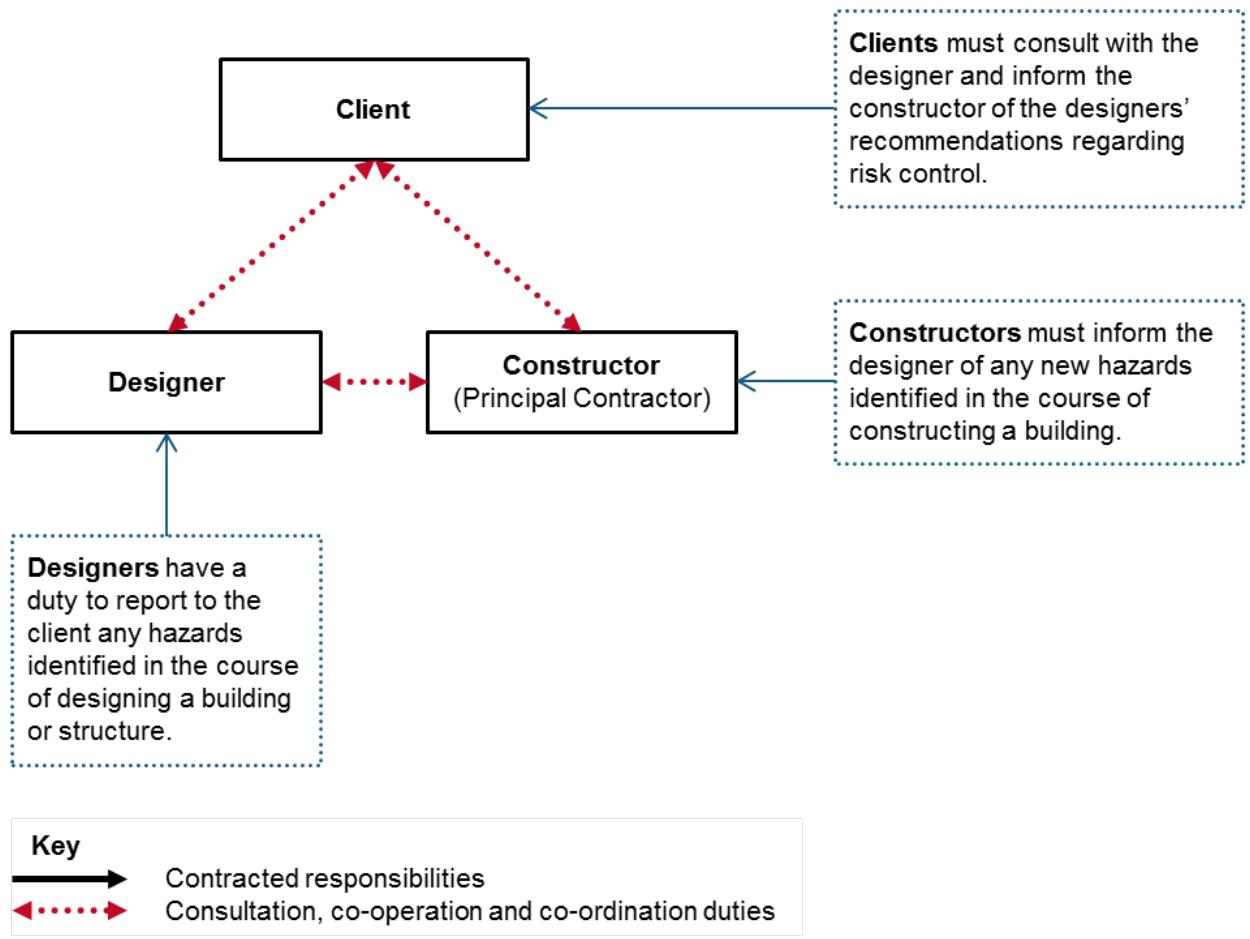 Figure 2 — Integrated design-and-construction model (typical domestic / apartment projects). Information flow is direct; pick the contractual model that best preserves the safety-info chain.
The code includes five contractual diagrams; the message is the same: contracts must require designer ↔ builder consultation and oblige downstream parties to receive the safety report. Don't let the contract structure break the information chain.
9. Records
- Hazard register — log of hazards identified, risks assessed, controls implemented, residual risks.
- Safety report — formal written assessment for unusual features.
- Notes on drawings — design rationale visible to constructor.
- WHS file — compiled doc passed to client + downstream PCBUs.
- SDSs — for any hazardous materials specified in design.
- Procedures / manuals — safe maintenance, demolition, dismantling.
- Post-construction feedback — defect reports, accident investigations, modifications.
10. Common pitfalls / quick wins
Do
- Push WHS at concept stage — that's where elimination is cheapest.
- Specify prefab at ground (e.g. fin-plate stair frames, lift-and-place trusses) to remove WAH from the build.
- Substitute hazardous materials early (low-VOC, lightweight pre-insulated duct, no silica benchtops).
- Design permanent maintenance access — fixed platforms, hoist points, fall anchors.
- Run weekly design reviews with site reps on complex projects.
Don't
- Defer safety to "the builder will sort it out". Each PCBU owns its part of the duty.
- Skip the safety report. Reg 295 doesn't have a "small project" exemption when features are unusual.
- Assume admin / PPE will fix a design hazard. They sit at the bottom of the hierarchy for a reason.
- Forget the demolition phase — it's part of the s.22 lifecycle.
- Let the contract structure cut the safety-info chain. Bake it into the contract.
11. Cross-references
- See also: general_construction_work (constructor side of the same chain), demolition_work, excavation_work
- Foundations: risk_management_process, whs_consultation_cooperation_coordination
- Falls: managing_risk_of_falls, falls_in_housing_construction
- Glossary: glossary_and_key_concepts
Source: model_code_of_practice-safe_design_of_structures-nov24.pdf (Safe Work Australia, model Code of Practice, CC-BY-NC 4.0). Source edition: November 2024 (supersedes October 2018). Last verified against SWA: 2026-04-28.